


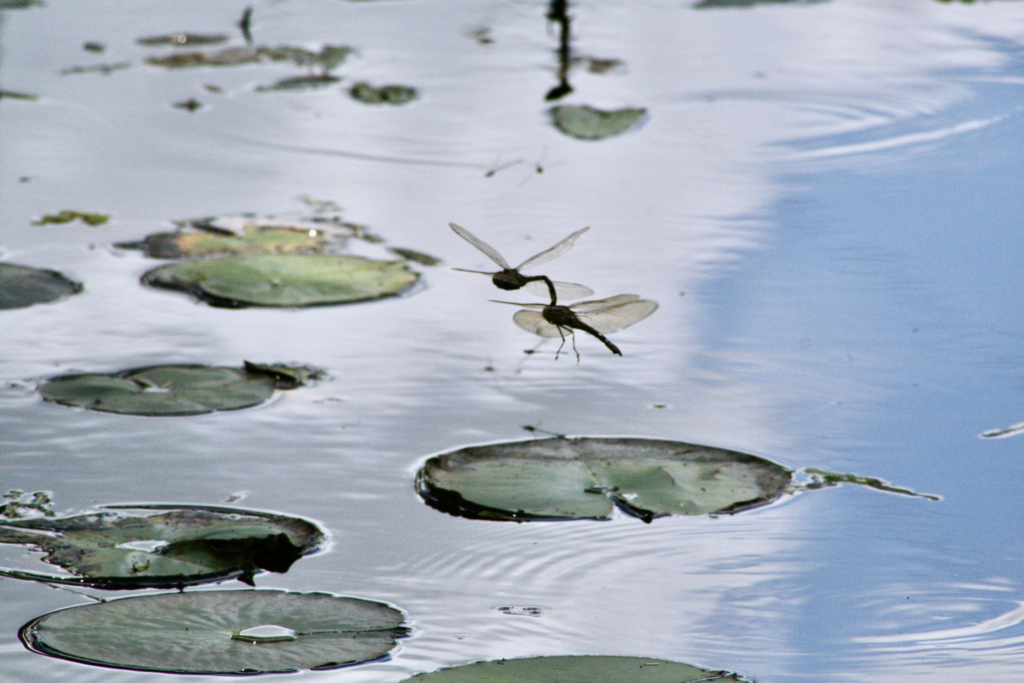
There is a precise moment before the rain truly falls when the air grows heavy with humidity and the world seems to hold its breath in a suspended silence. The world is not still; it is vibrating at a frequency of its own, where the first soft flutter of dragonfly wings begins to appear. From that point on, a quiet dialogue opens between human attention and the living world.
The Frequency of Intuition
In a rice-growing culture, rain has never been merely weather. It is lifeline, survival rhythm, and a promise of harvest. Long before meteorological instruments existed, the sky was the greatest book, and people learned to read it through the smallest messengers.
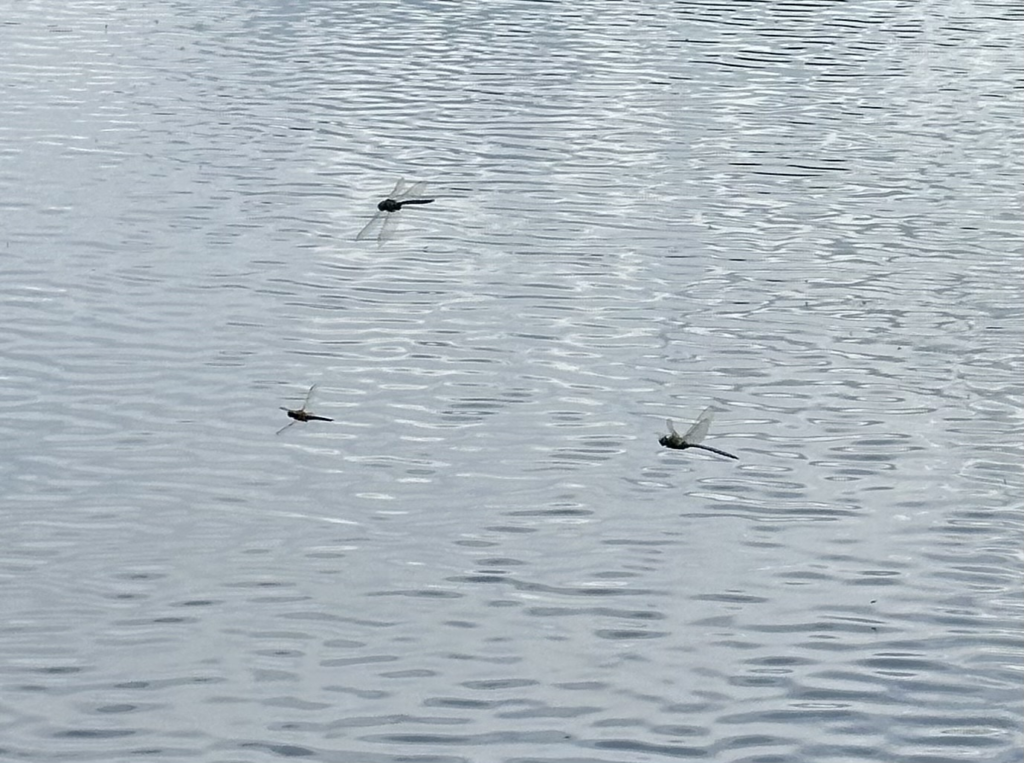
“Chuồn chuồn bay thấp thì mưa,
Bay cao thì nắng, bay vừa thì râm.”
(Dragonfly altitude is low for rain, high for sun, and midway for the cooling clouds.)
This folk wisdom has echoed through generations across Vietnamese rice fields—a way for our ancestors to decode the language of nature. This observation is rooted in a sophisticated physical reality: dragonfly wings are sensitive sensors tuned to atmospheric pressure and humidity.
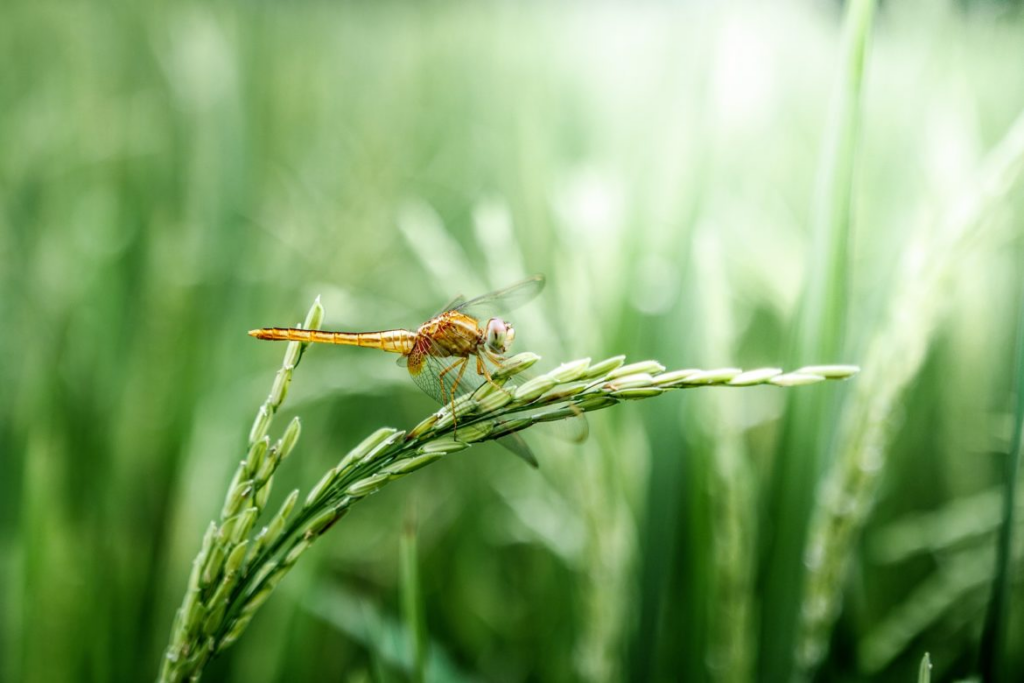
As rain approaches, the air becomes heavy. Moisture clings to the dragonfly’s body, particularly to the fine hairs and delicate wing structures, adding weight and making high-altitude flight a struggle. Simultaneously, the shift in air pressure forces small insects—their primary food source—to fly lower. To navigate this “heavy” air and stay close to their prey, dragonflies descend, gliding just above the earth.
To observe the altitude of a wing is to read the frequency of a rainstorm taking shape. Our ancestors’ insight lay in this: they didn’t need to wait for dark clouds to appear; they only needed to watch a shimmering wingbeat at their feet. It was a profound connection where humans, creatures, and weather shared a single pulse.
The Dragonfly Wing: An Pattern of Grace
Seen up close, a dragonfly’s wing is not a simple flat membrane; it is a complex architecture of folds, ridges, and valleys. This “corrugated” structure creates tiny air pockets, allowing the wings to be incredibly light yet possess a startling structural integrity to withstand headwind pressure and the weight of moisture.

These intricate veins evoke the meticulousness of master craftsmanship, where no detail—however minute—is redundant. These “fractures” do not represent damage; on the contrary, they are a form of compressed architecture; a geometric order designed to distribute pressure across the entire surface. Each microscopic cell is a reservoir of tension, creating a fragile entity that feels like a material refined over eons to reach an incredible durability.
The refinement lies in a paradox: repetition that feels spontaneous, yet remains perfectly disciplined. No two cells are exactly alike — much like handcrafted marks that carry their own singular signature. Together, these structures create a surface with feeling: raw as nature, precise as design.
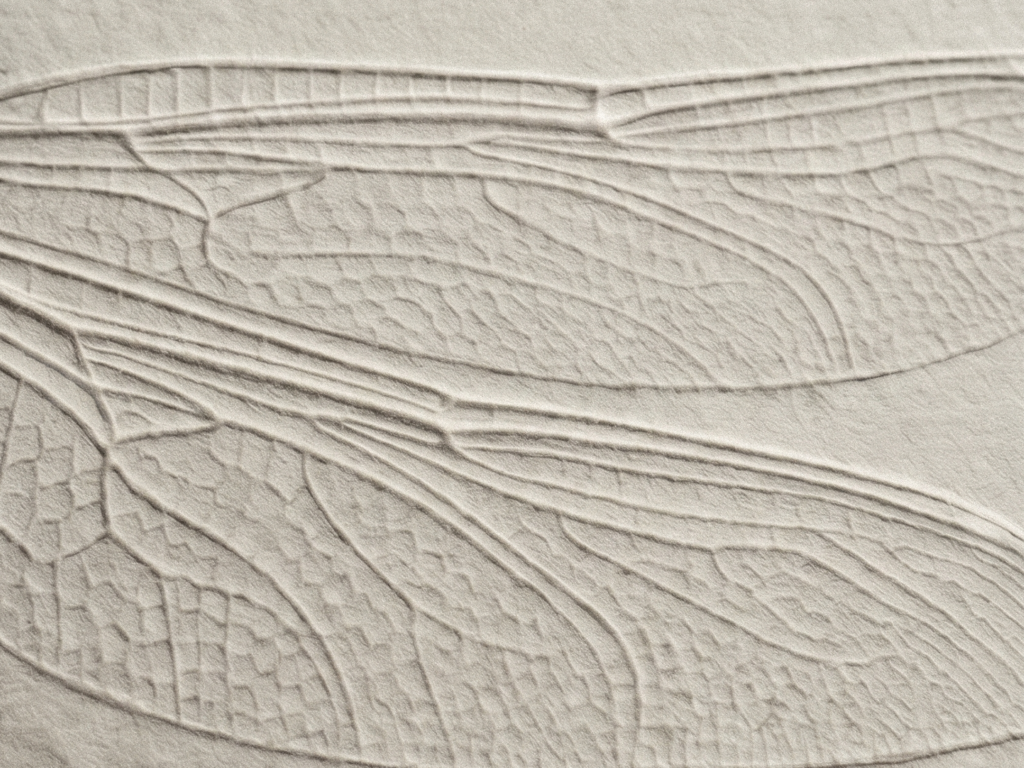
When light passes through and casts its shadows on the ground, beauty is woven from the meeting of inner strength and quiet elegance: an arrangement that reveals itself without announcement, in the softest tremors of motion.
Behind that exquisite form lie harmonious beats foretelling the rain. As these signals fade, the rain truly begins to fall.
Continue with Pt. 02: From Wingbeats to the Soul.