
Craft · the Ceramic bottle · 50 ml
Ceramic
and fire
clay, by hand
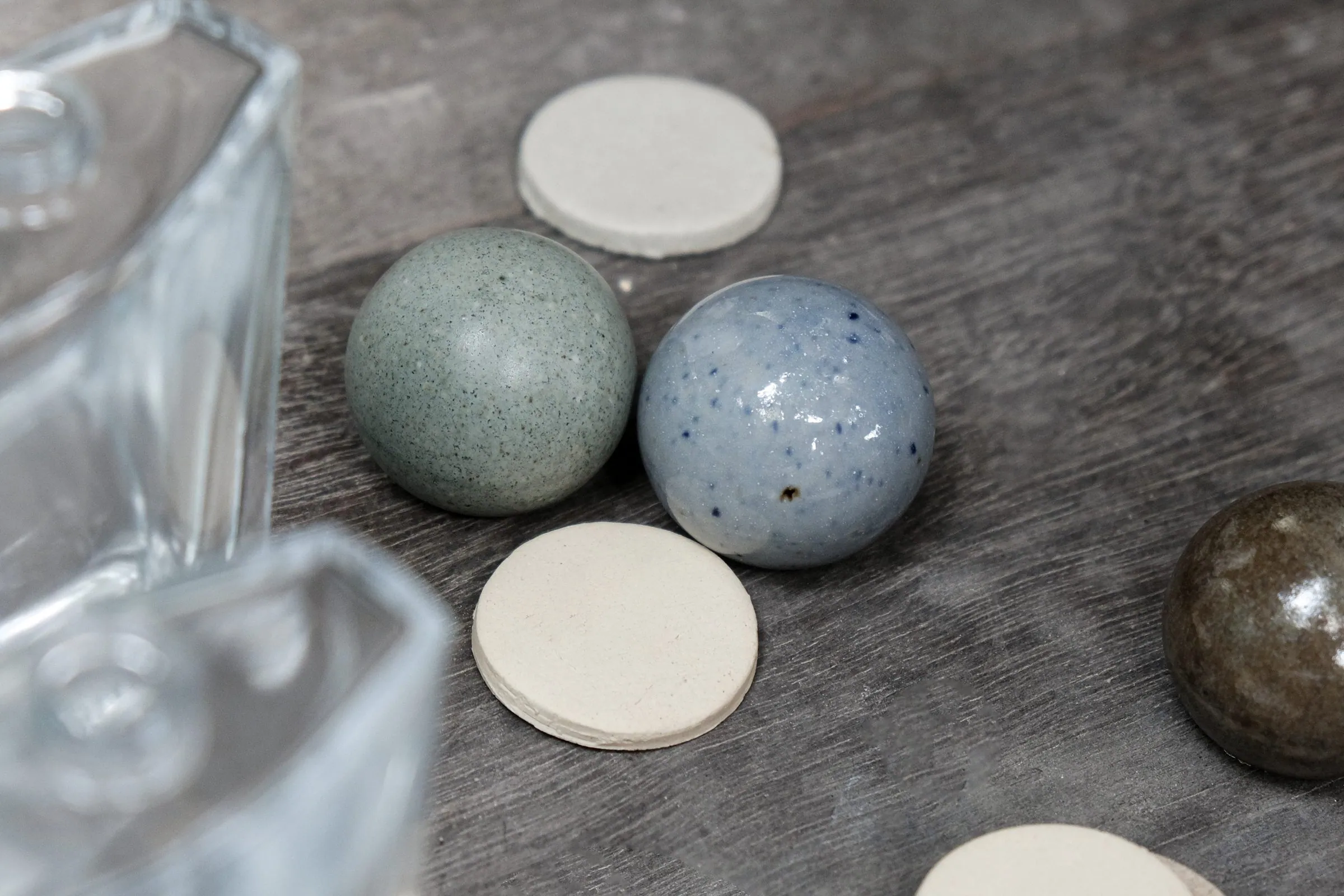
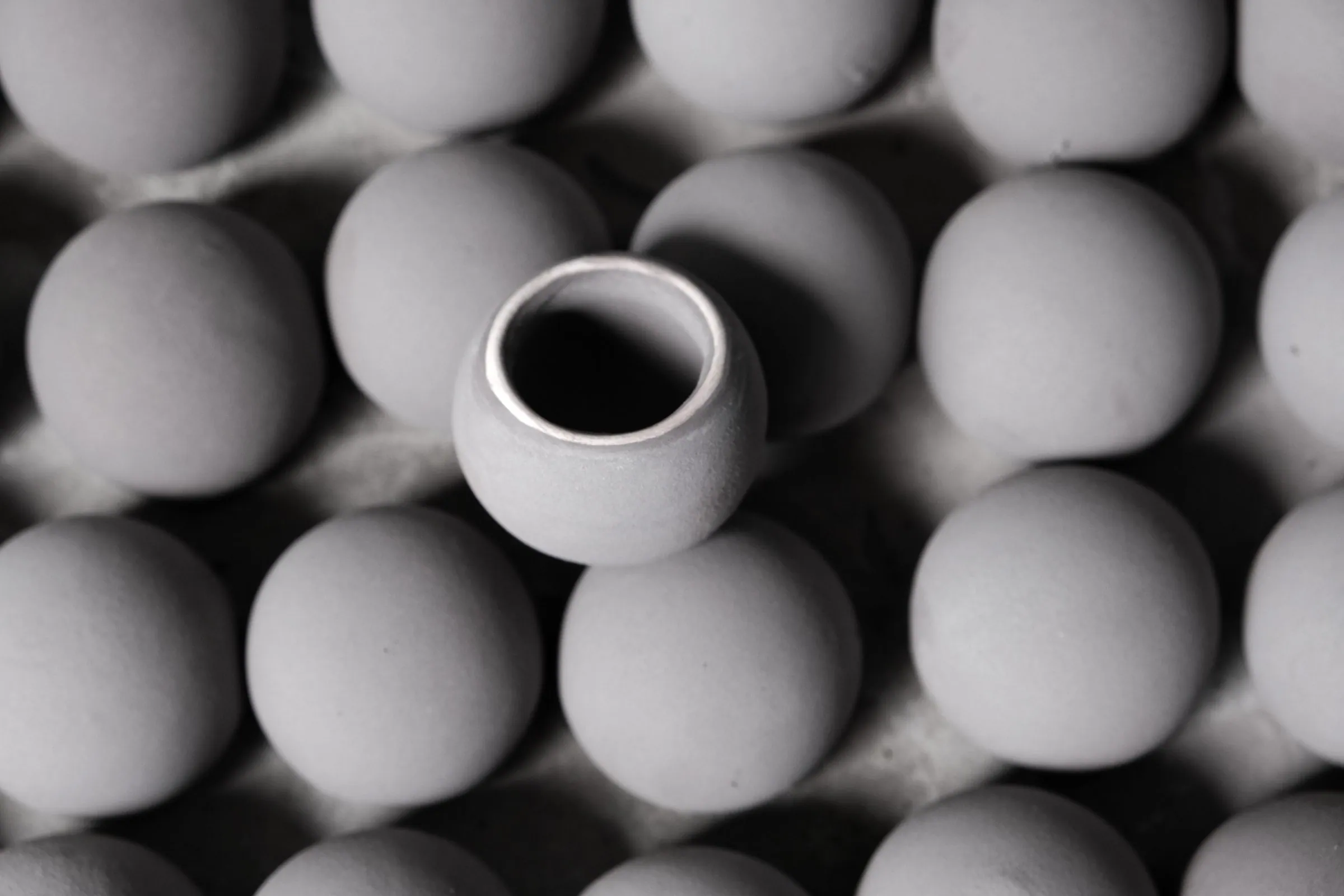
The Ceramic bottle from R Parfums is closed with a small sphere of fired clay. At a ceramics studio in Vietnam, liquid clay is poured into white moulds, each mouth is cut one at a time, and the glaze goes on pink; the kiln decides its colour, which recalls Chu Đậu ware and shifts from one firing to the next.
Eight steps, from clay to box
- I
Clay
- II
The mould
- III
By hand
- IV
Drying
- V
Glaze
- VI
Fire
- VII
What the kiln gives back
- VIII
Dressed
Clay
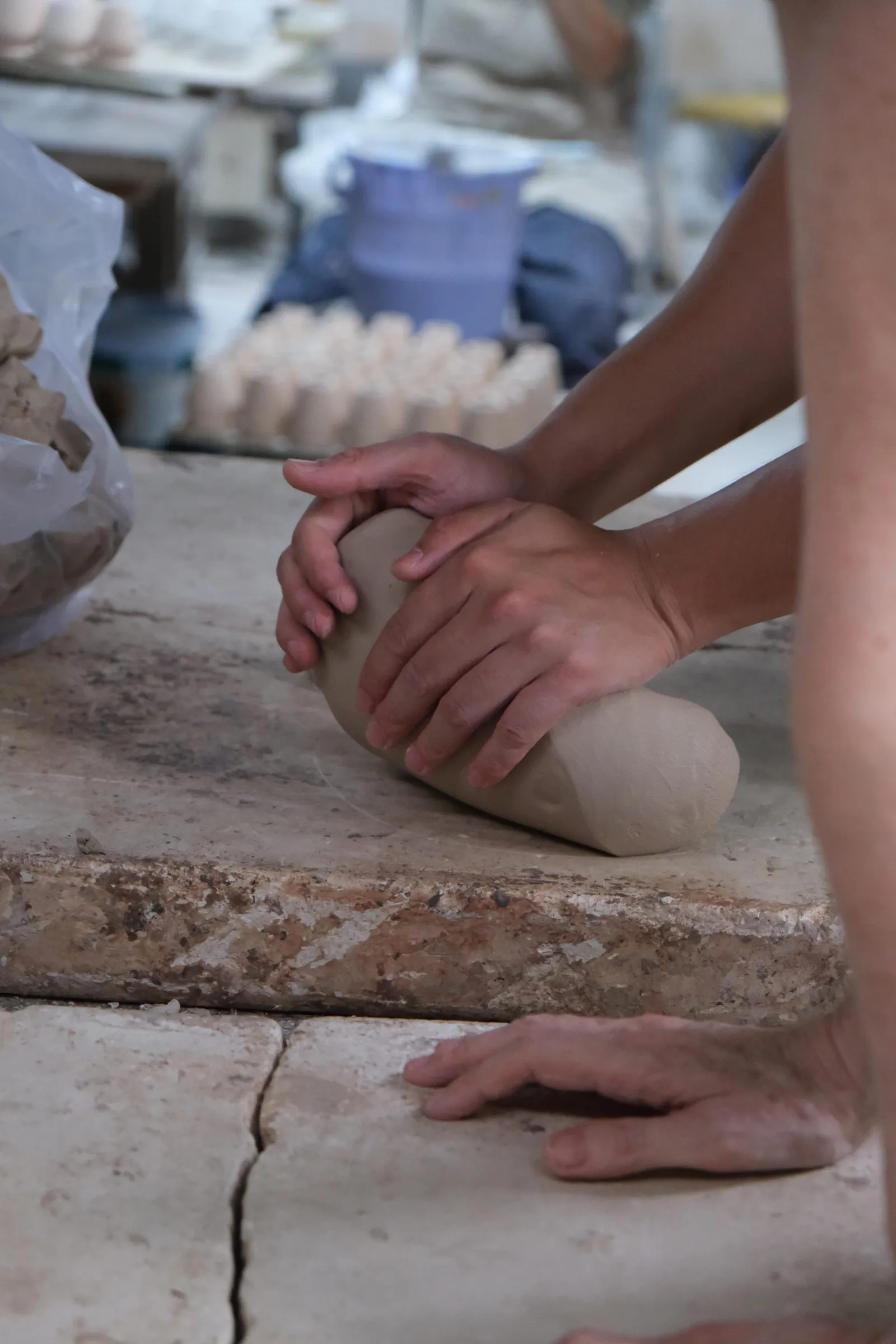
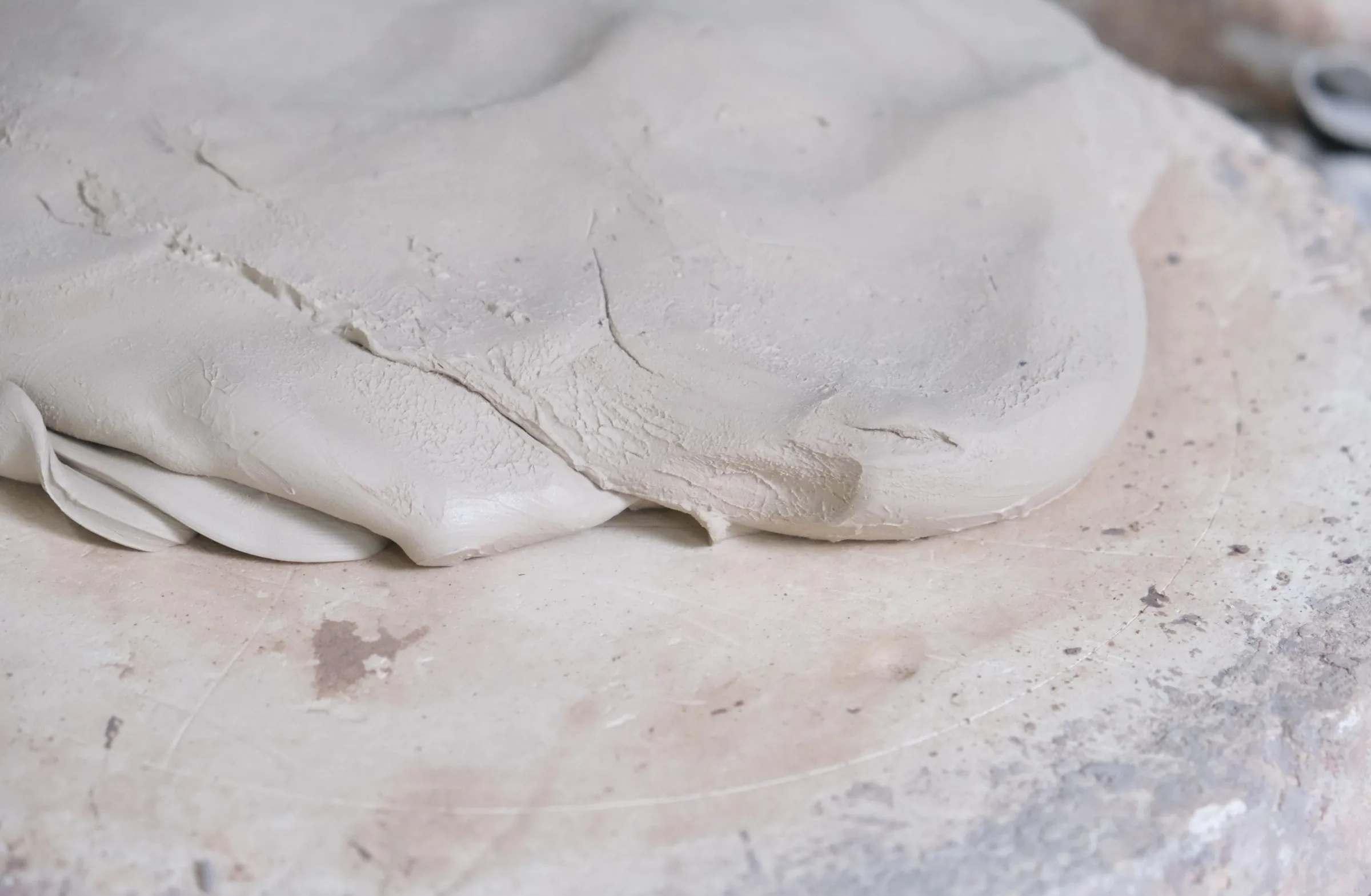
It begins with clay. On a plaster table, two hands knead a block of it. Behind them sits a tray of pale spheres.
II
The mould
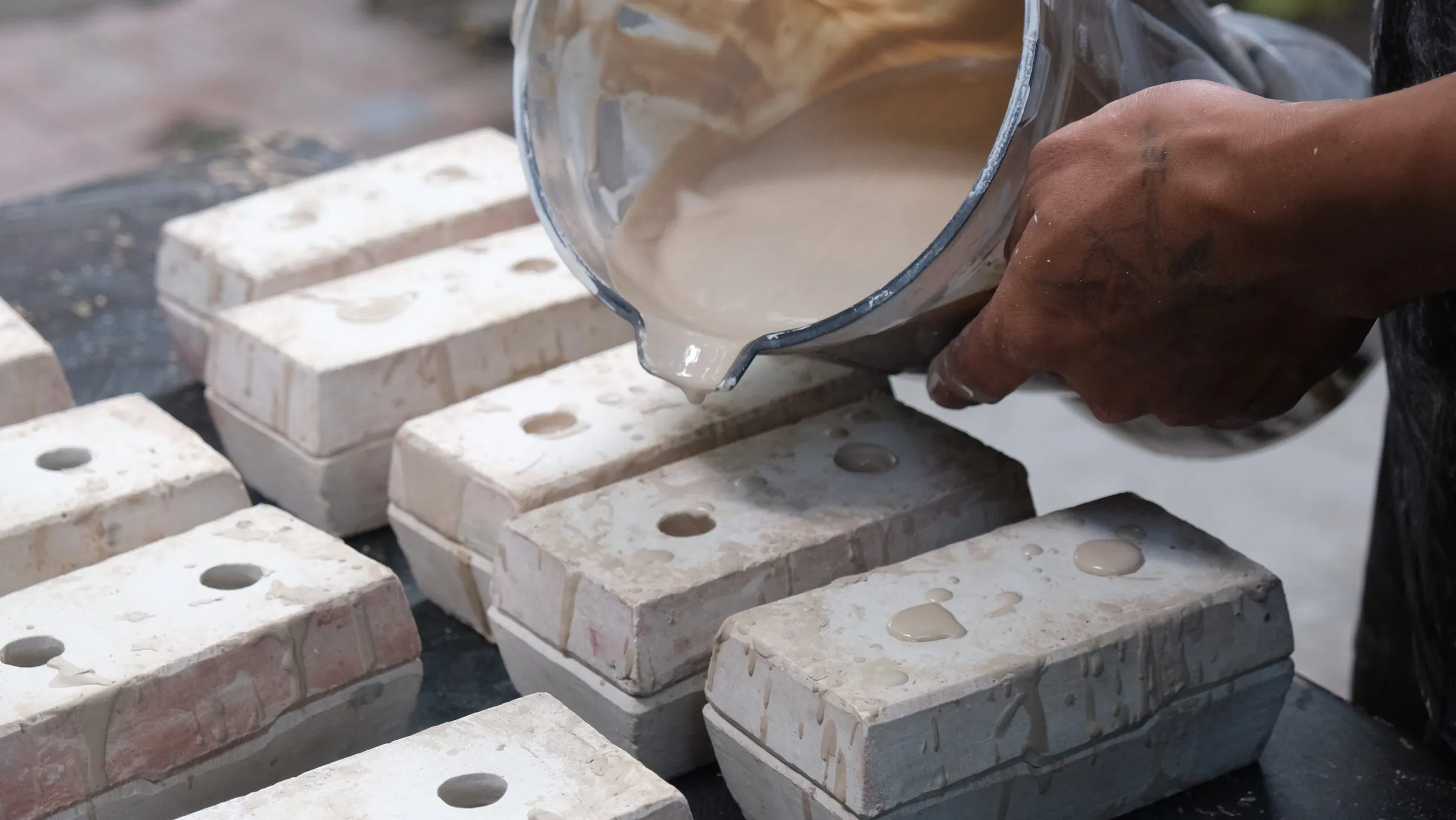
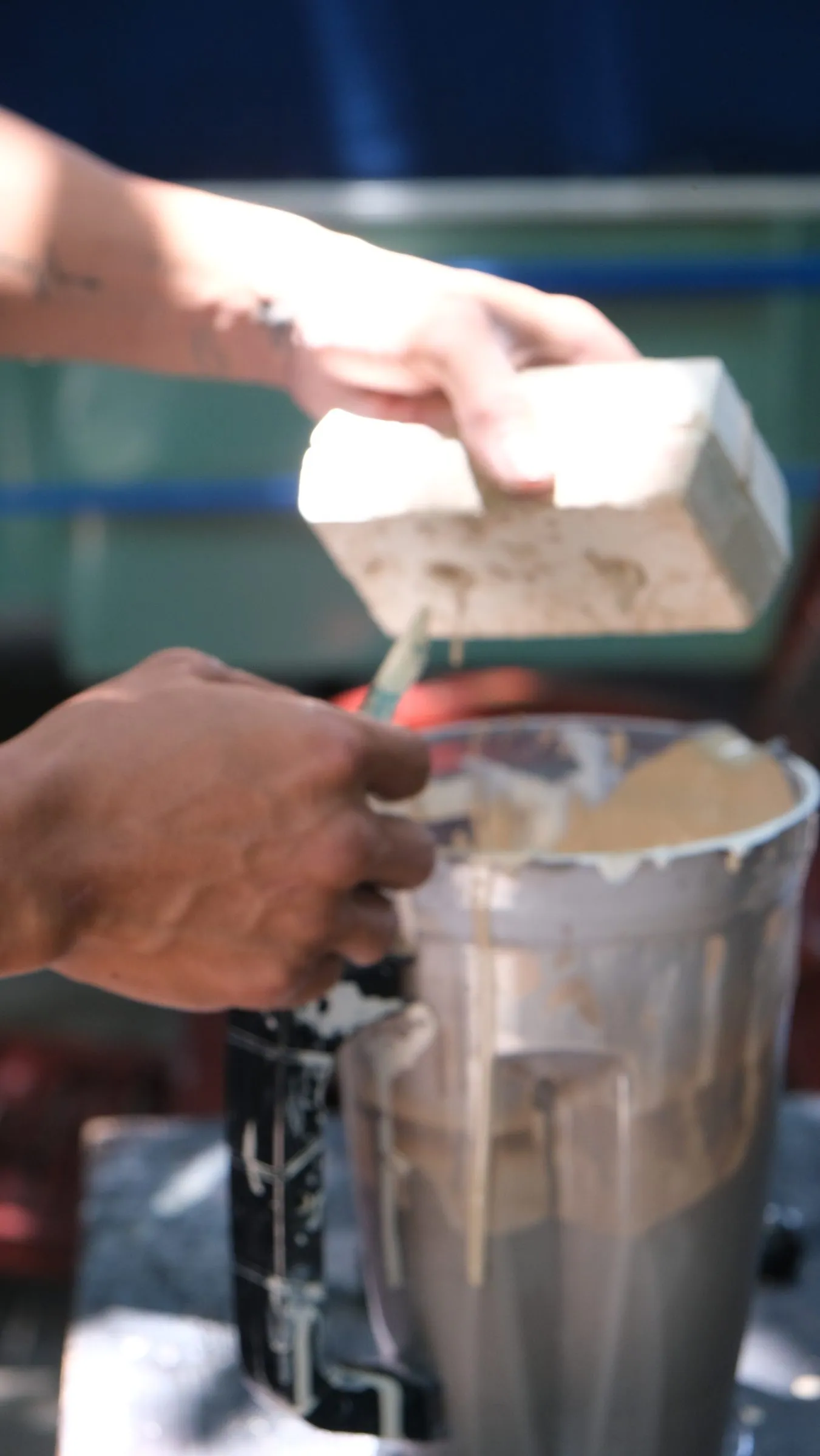
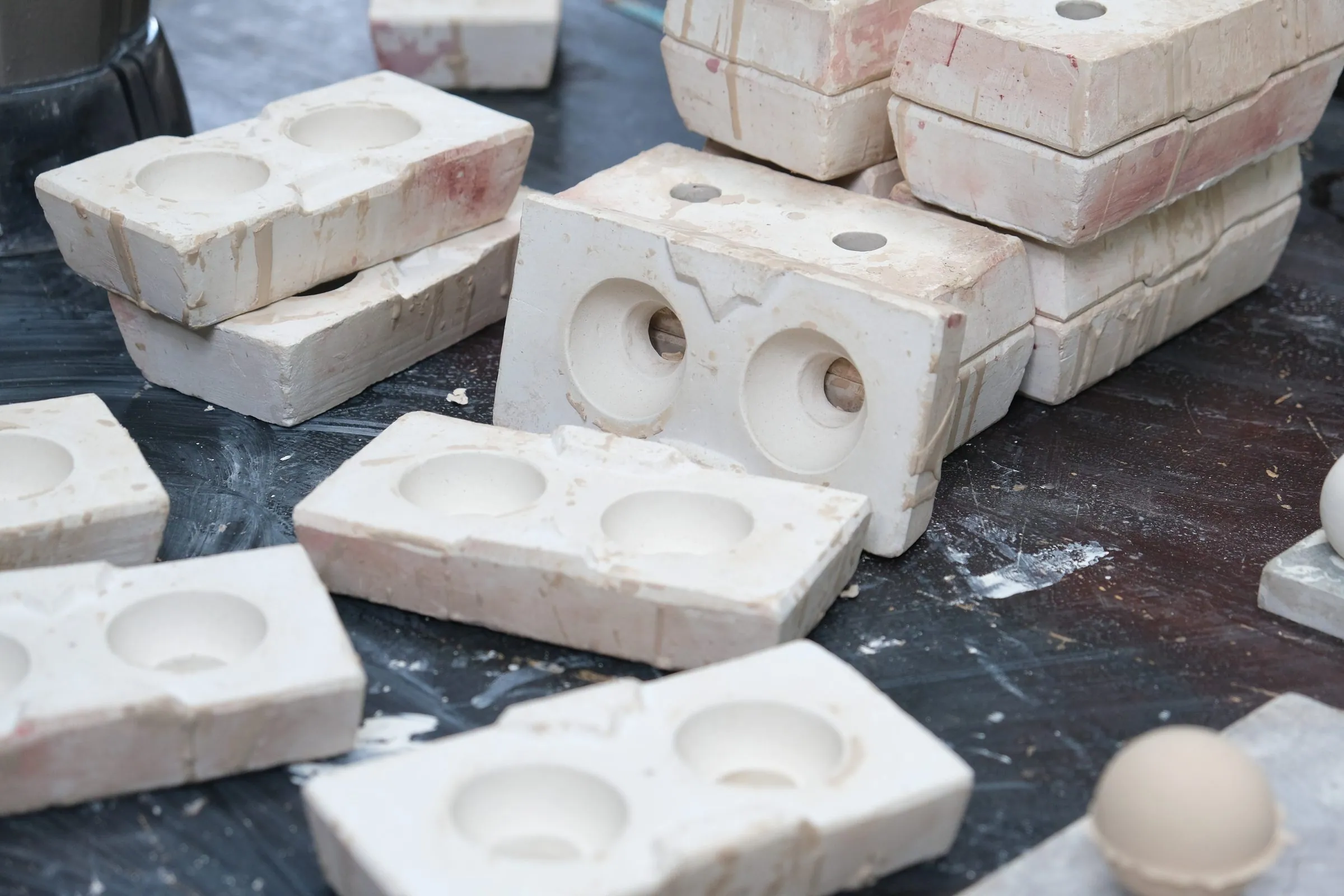
Liquid clay is poured from a jug into a row of white moulds, each with a small round opening. Then the mould is tipped, and the clay it does not need runs back into the jug.
The halves of the mould are pulled apart. Inside, a sphere the colour of cream.
III
By hand
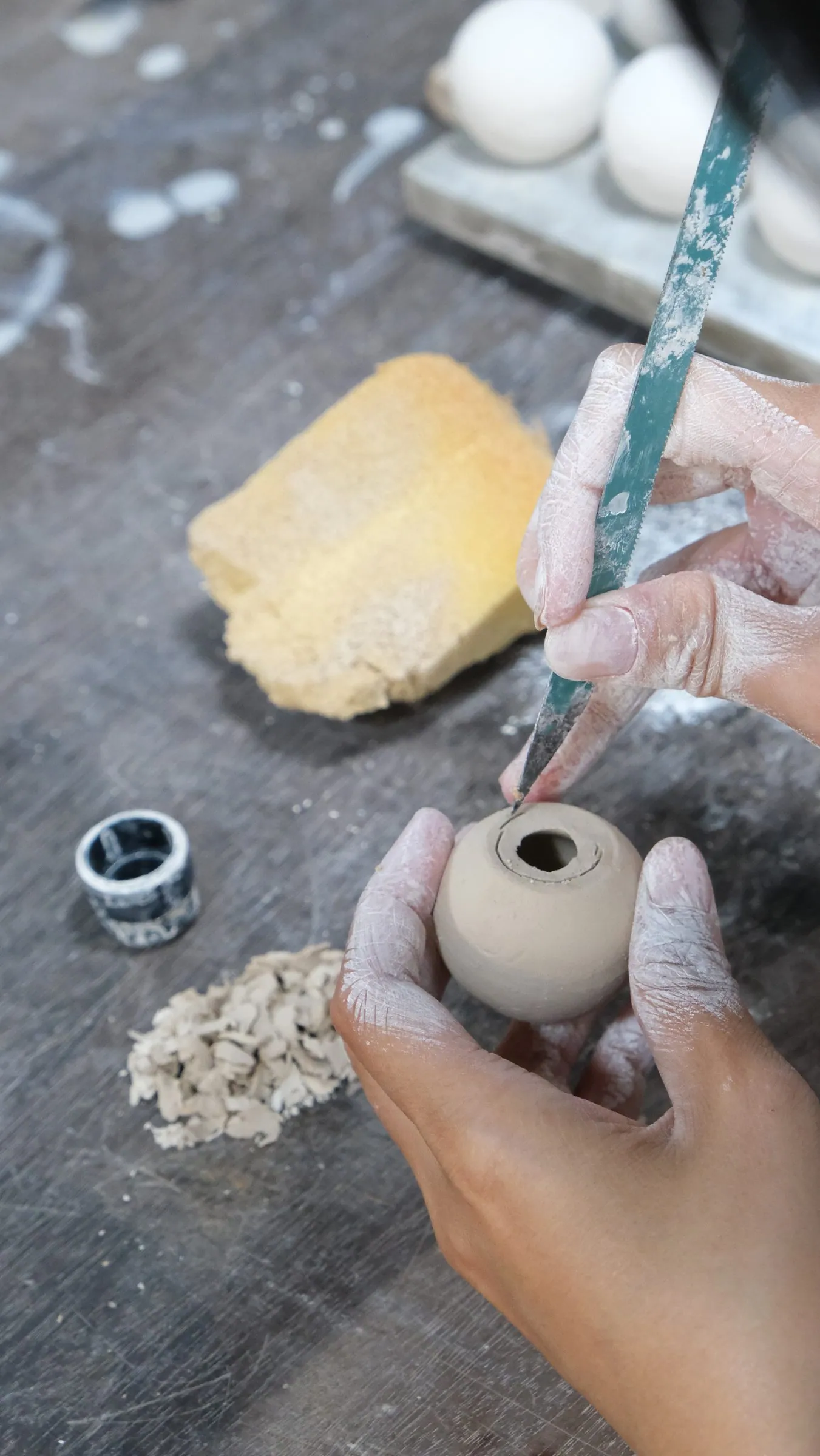
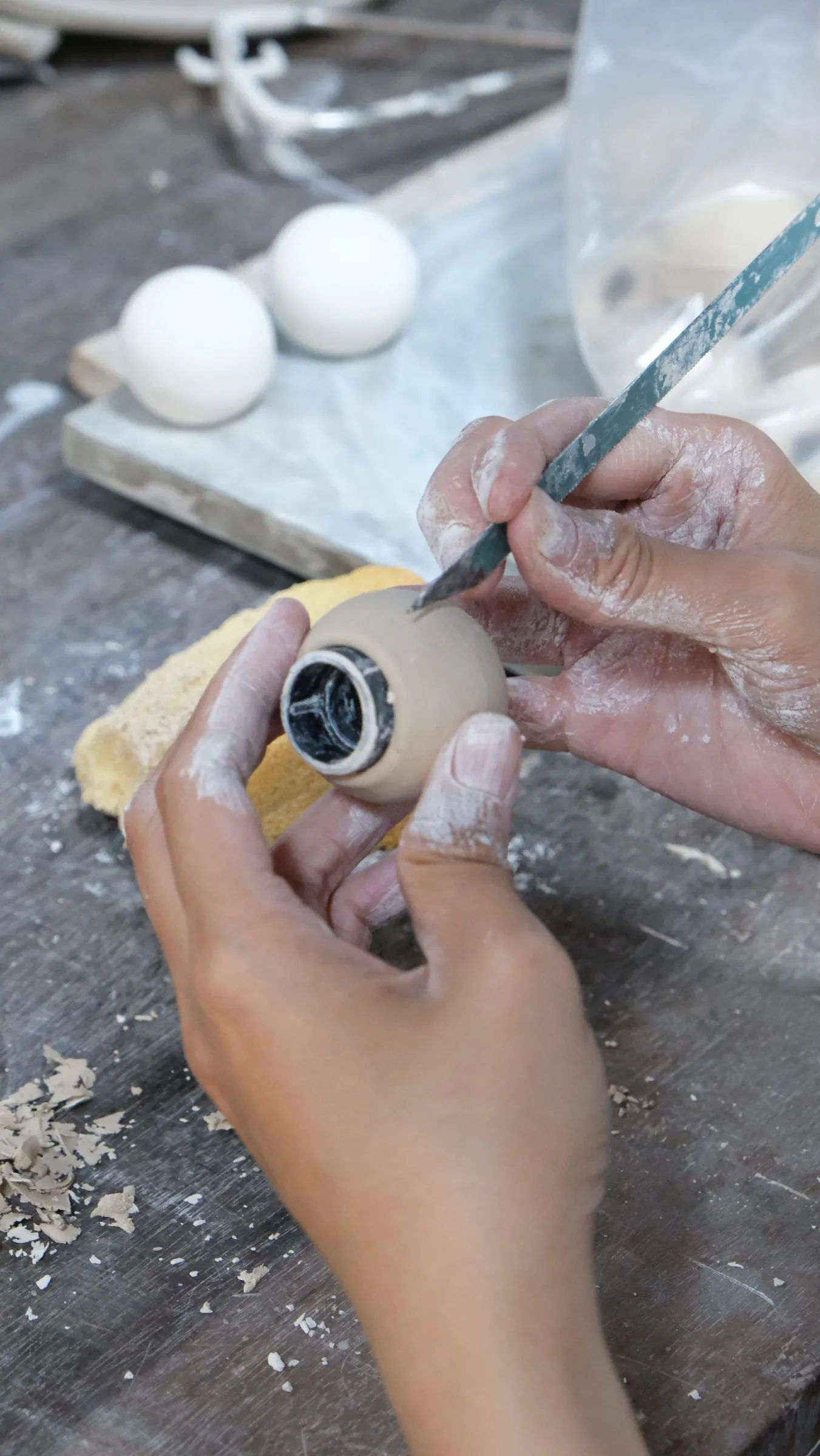
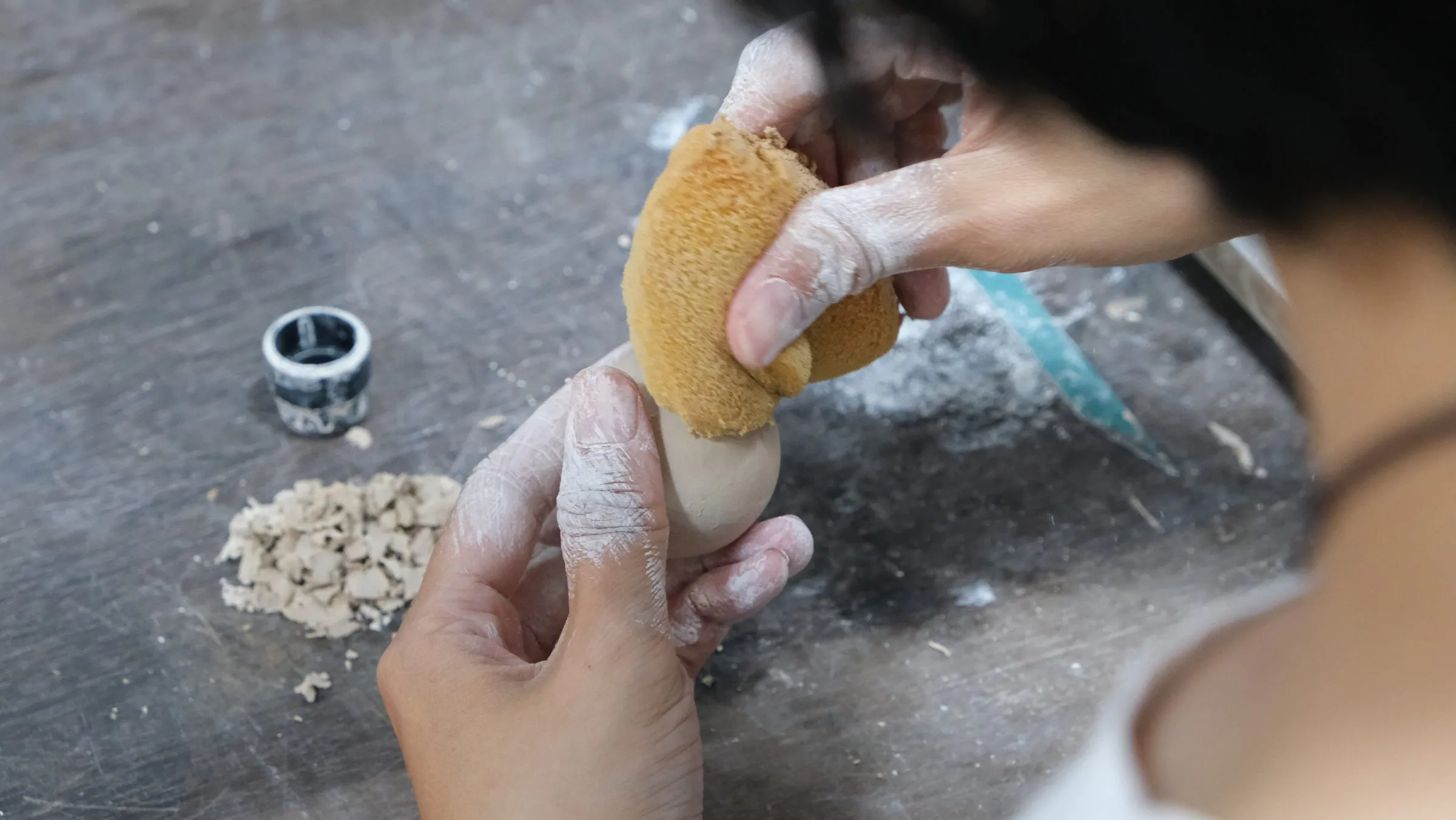
Each sphere needs a mouth, the opening that will sit on the neck of the bottle. It is cut with a small tool, one sphere at a time, and the surface is wiped smooth with a sponge. Crumbs of clay gather on the table.
No mould does this part.
IV
Drying
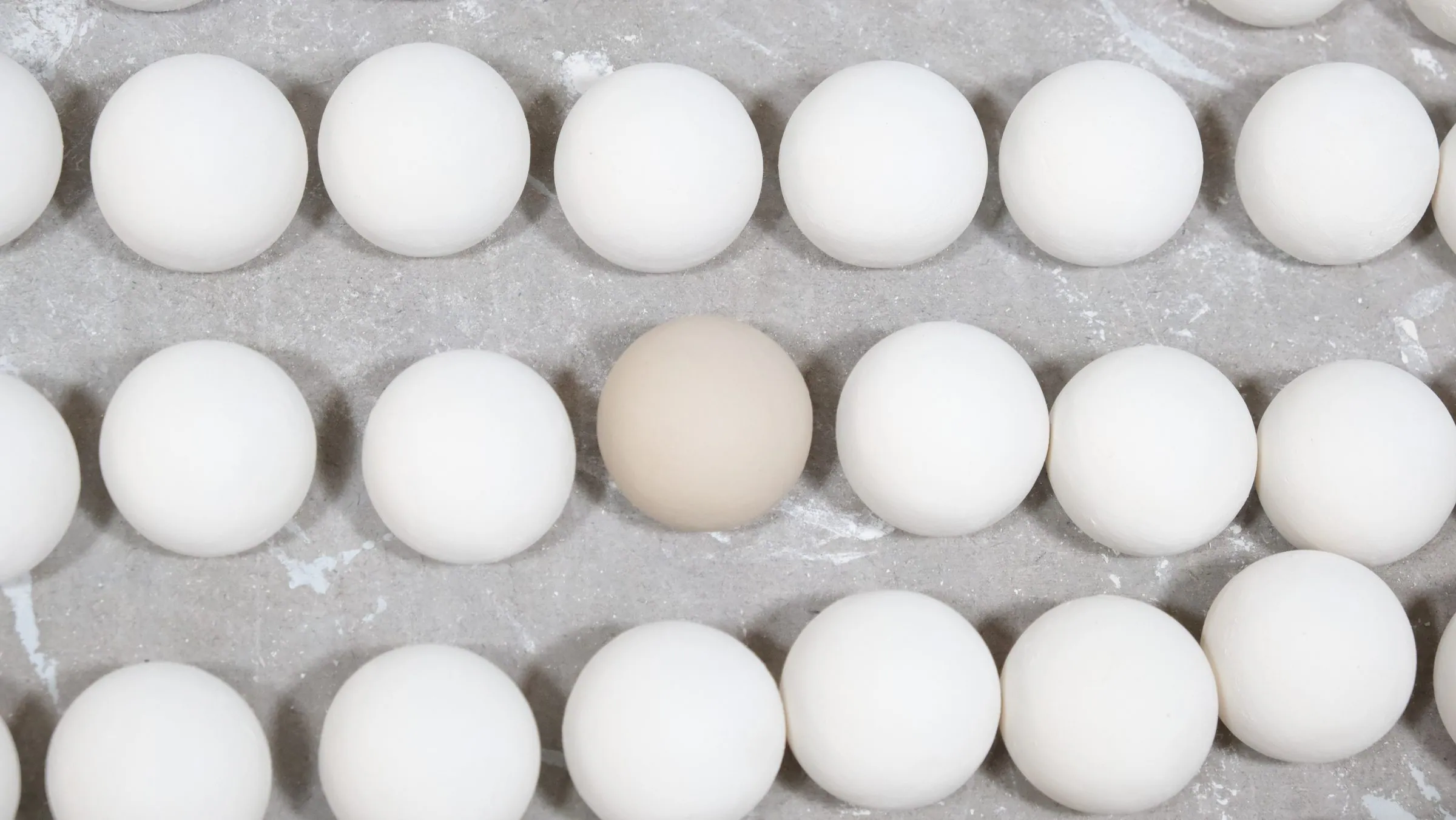
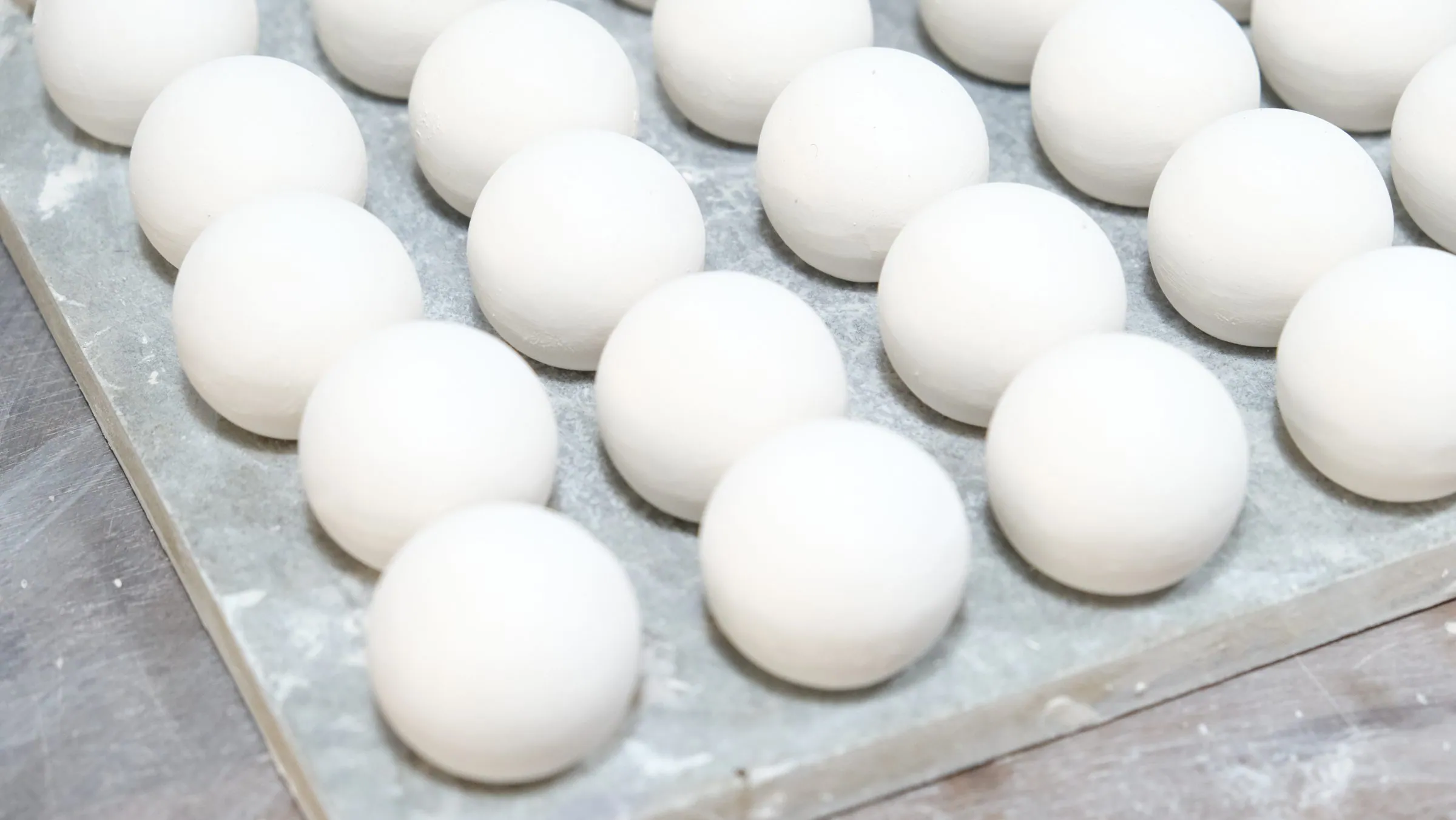
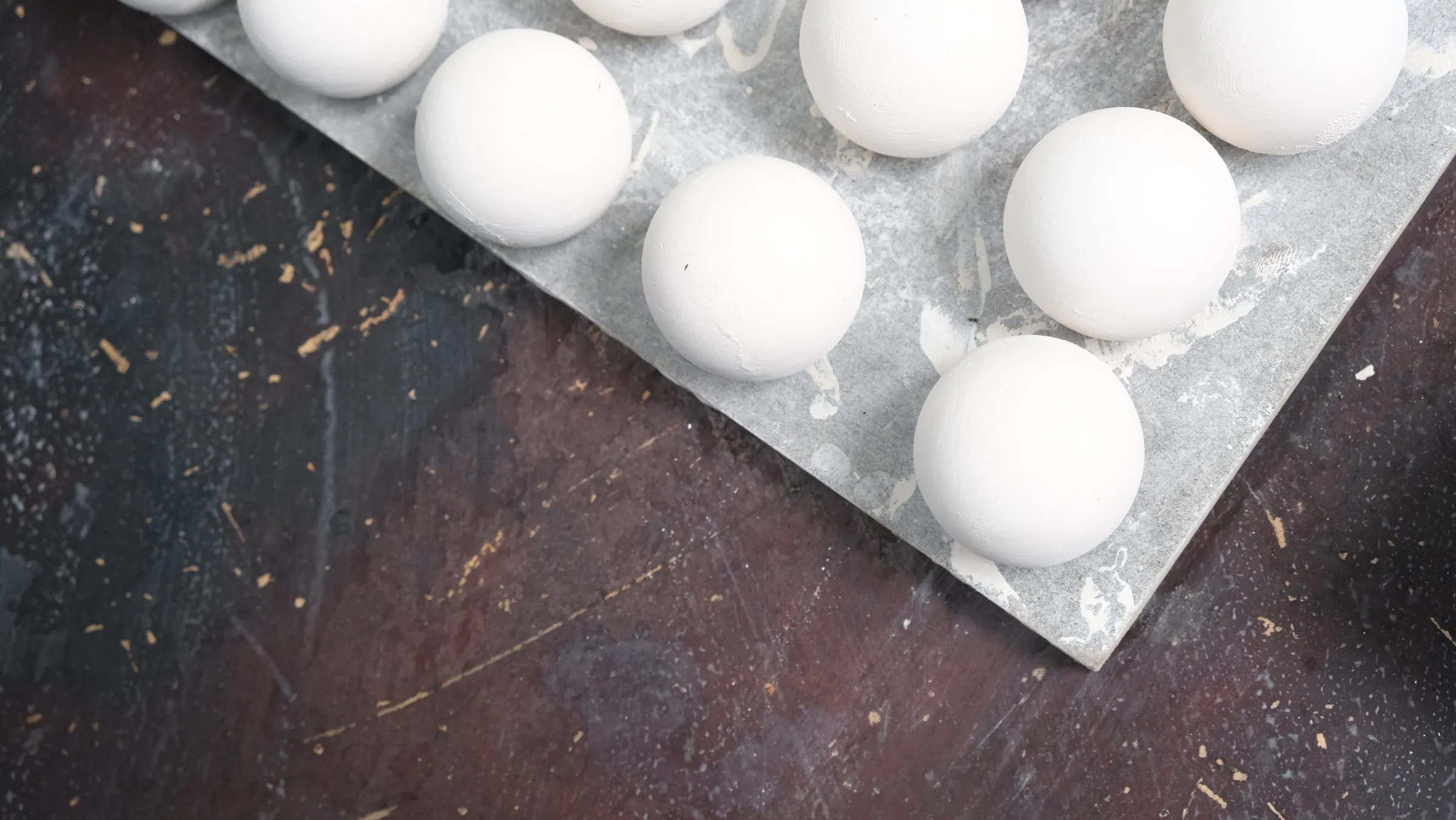
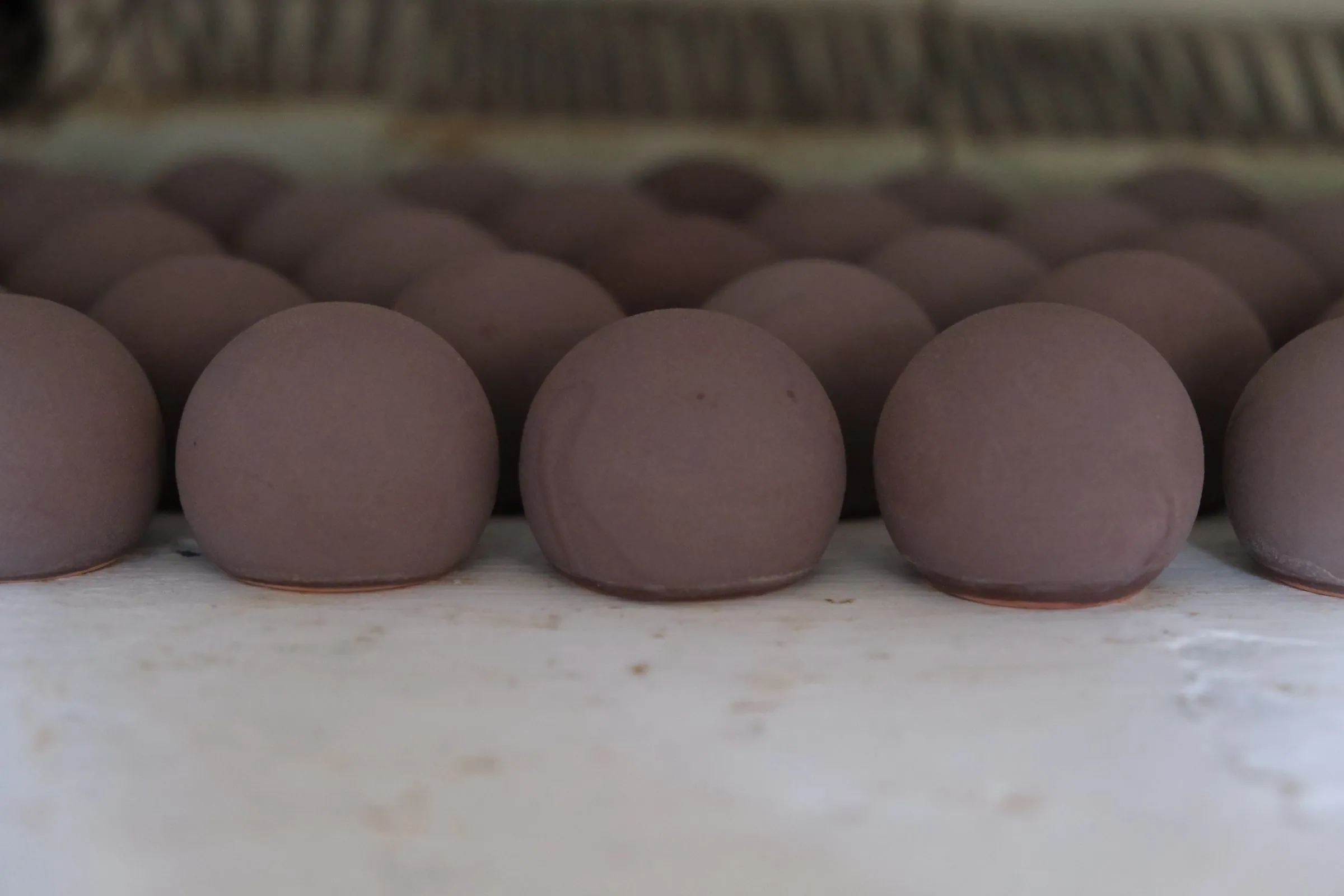
Then they wait. Rows of white spheres dry on boards before the glaze goes on.
Glaze
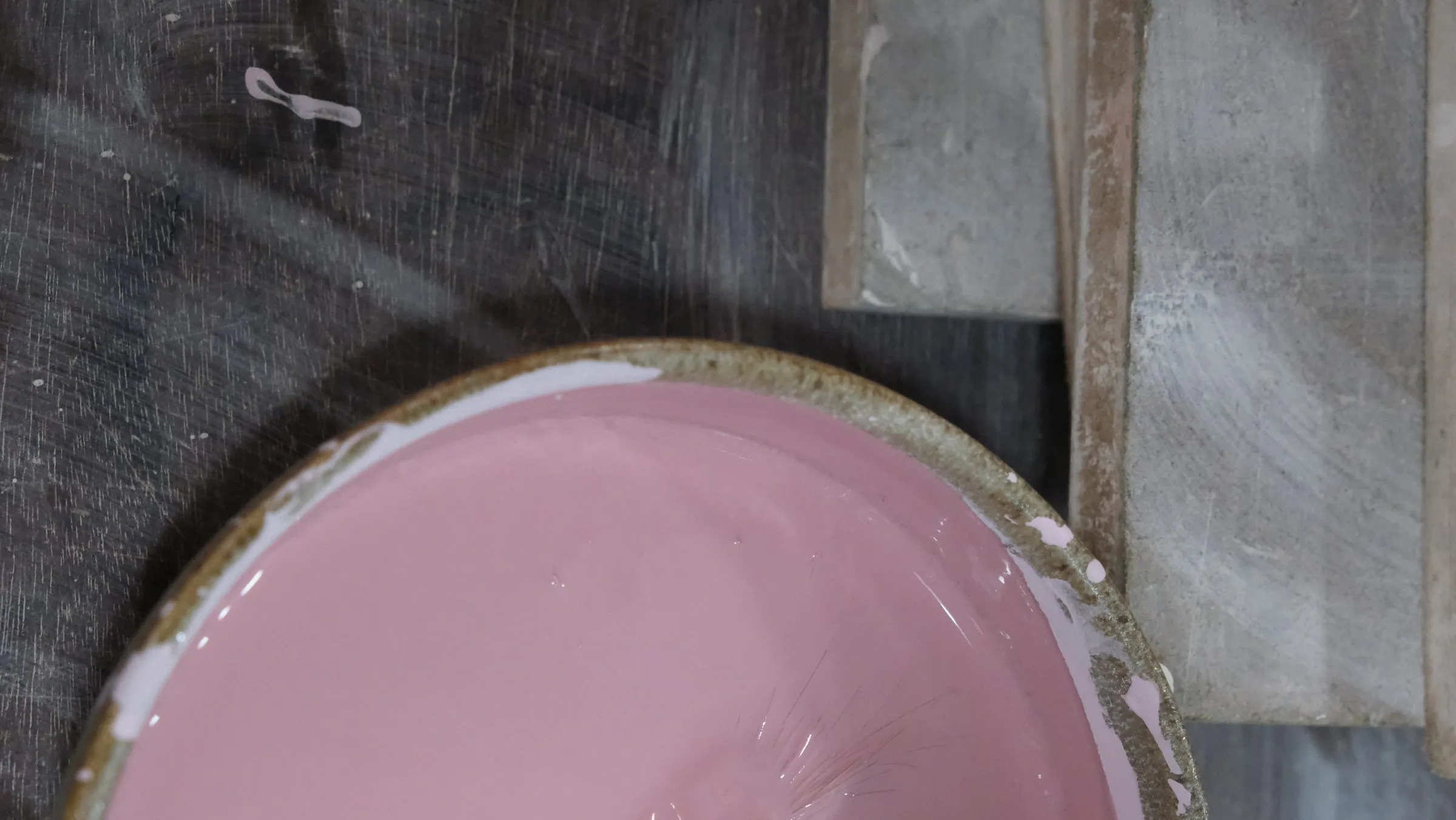
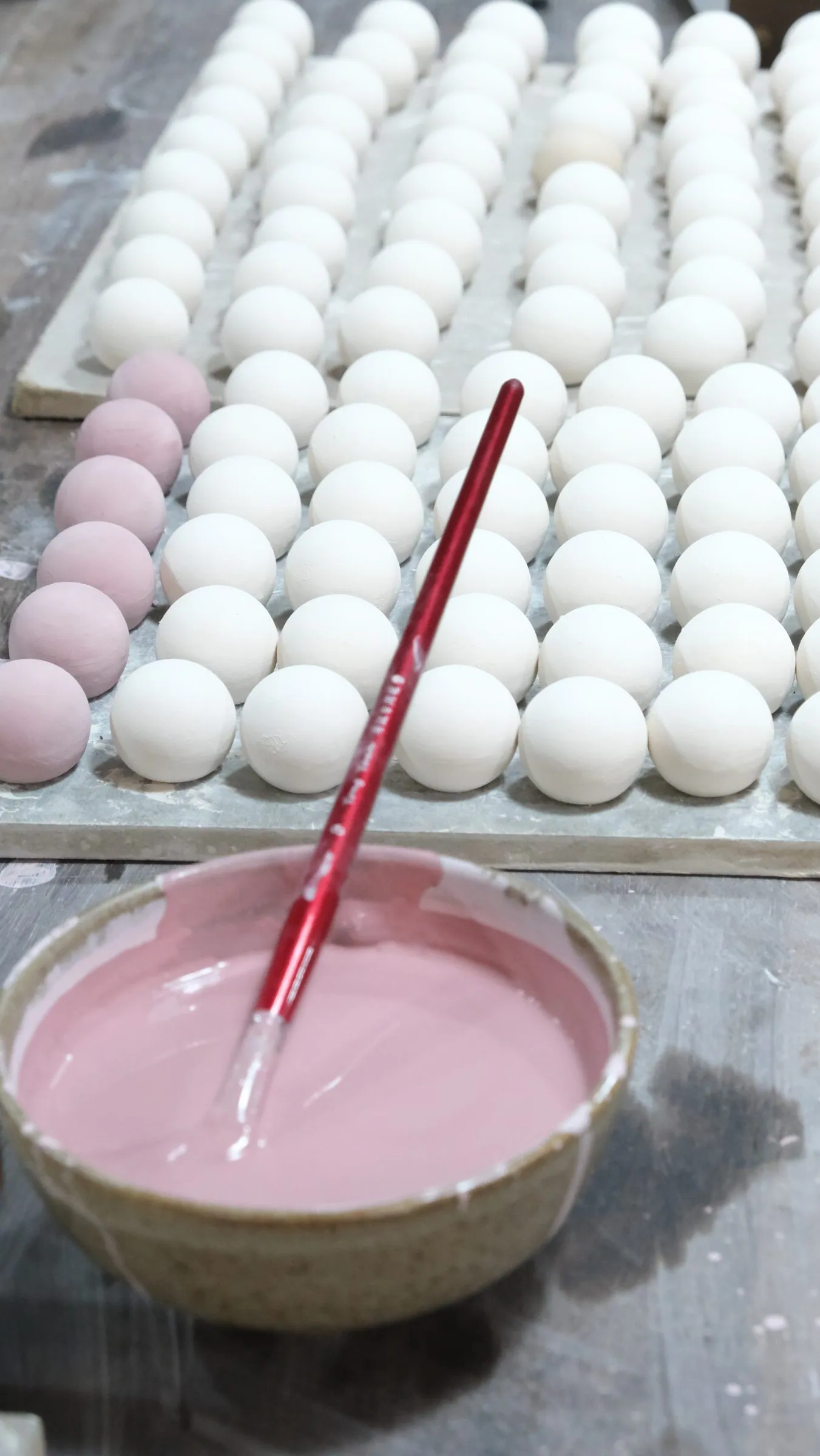
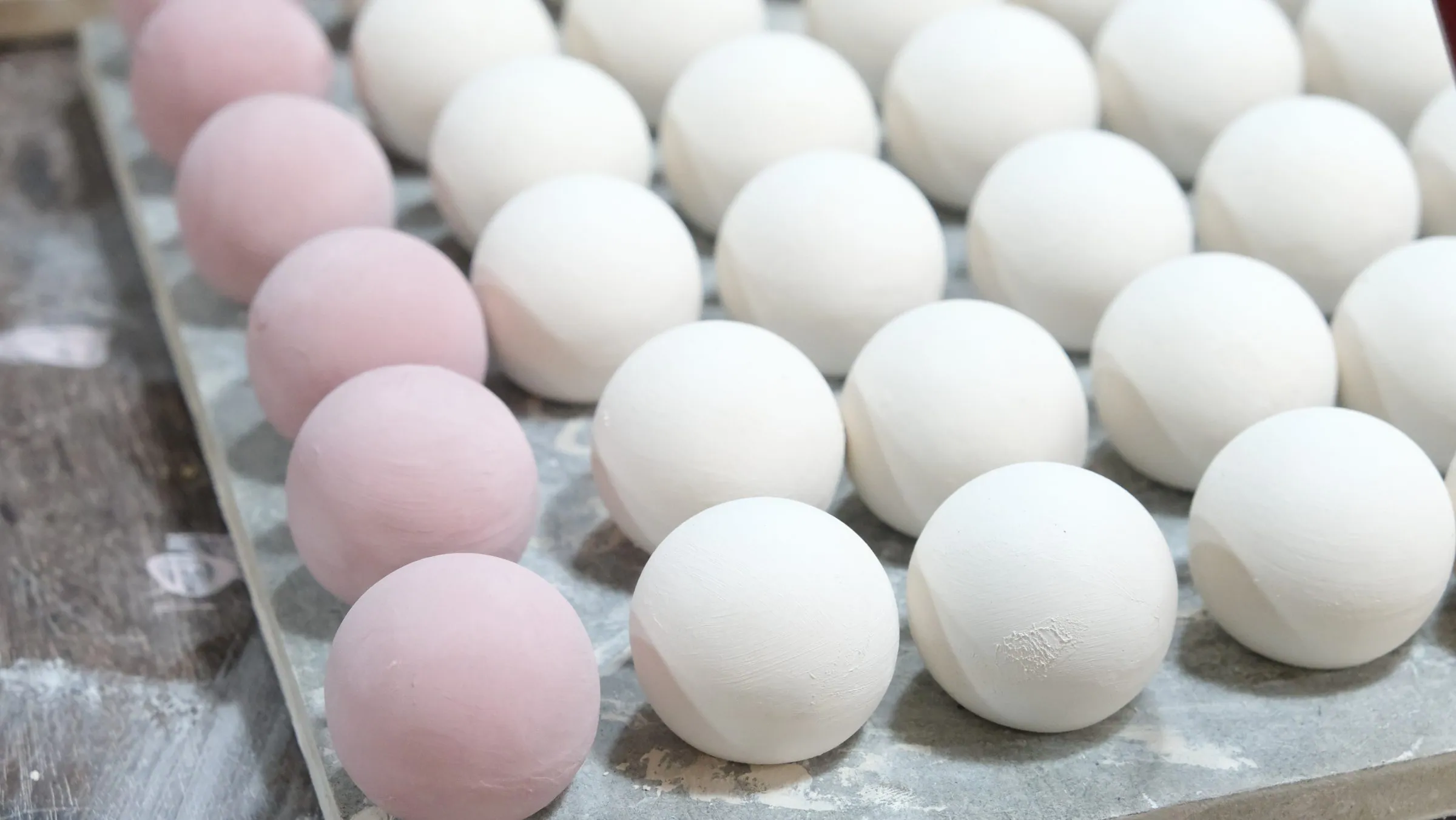
Raw glaze is brushed on, one row of the board at a time.
Raw glaze is pink. The fire decides the colour.
VI
Fire
1000 degrees Celsius
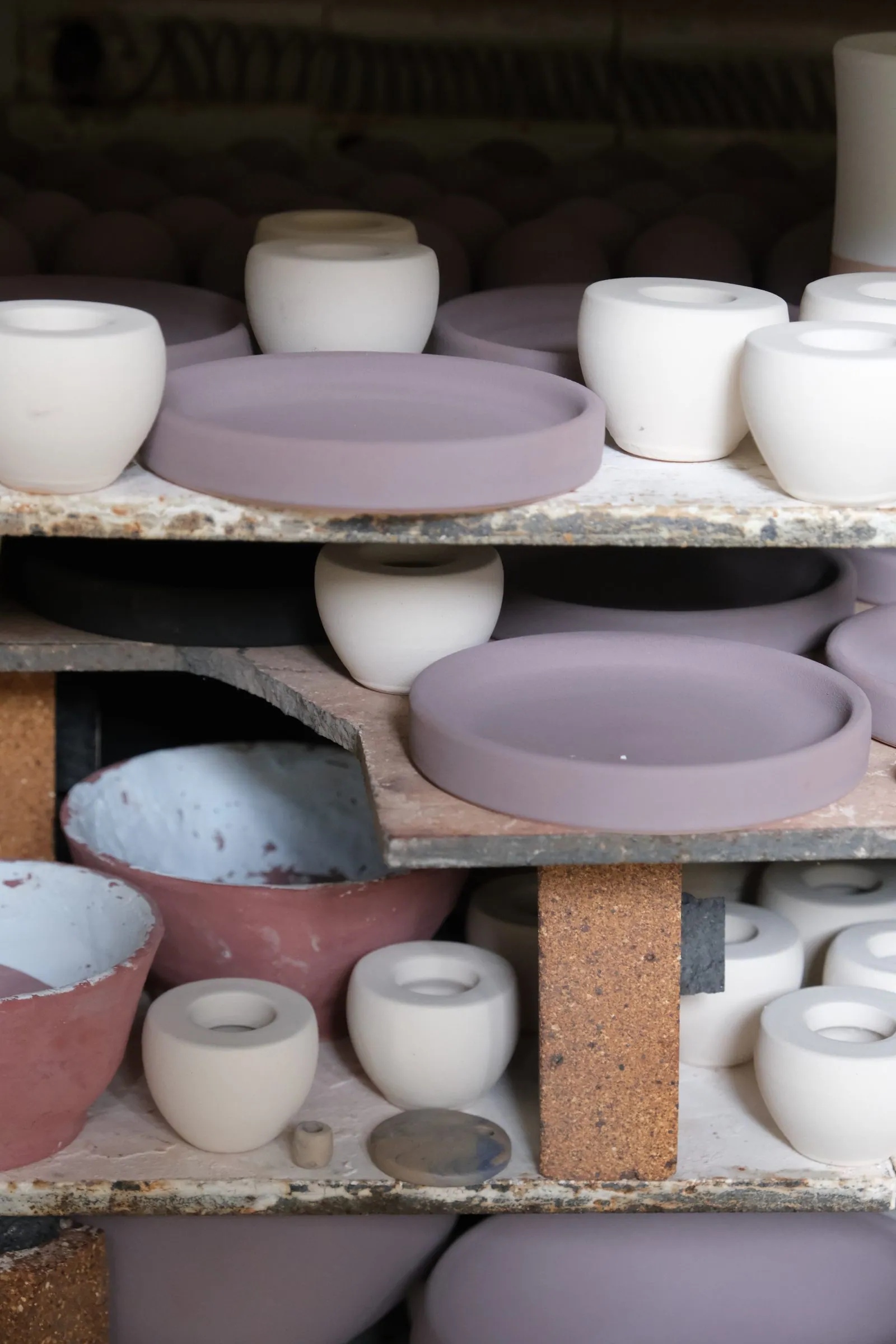
The glazed spheres go into the kiln in rows, on its shelves. Then the kiln is brought up to heat.
Pink goes in. Something else comes out. The glazes recall Chu Đậu ware.
VII
What the kiln gives back
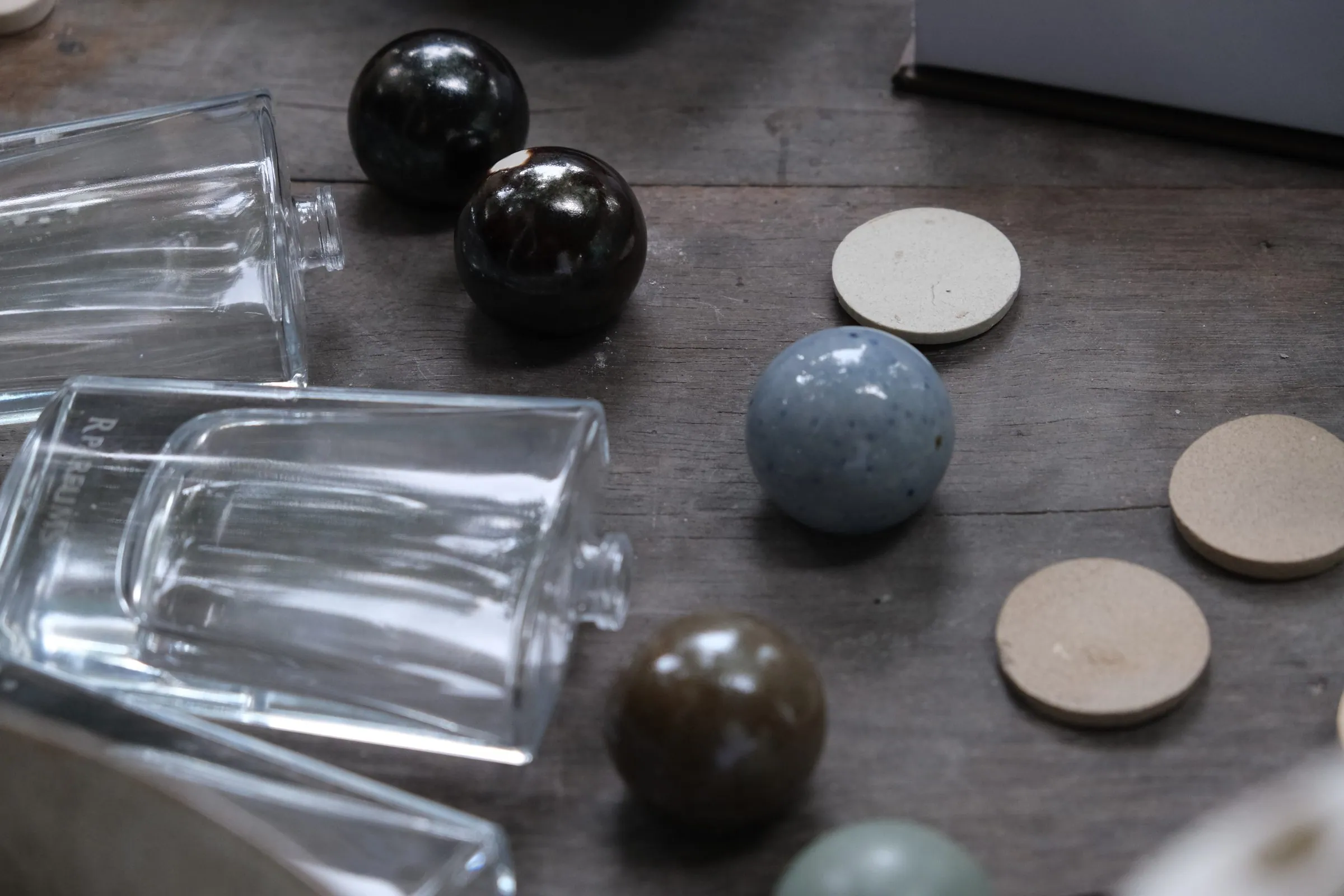
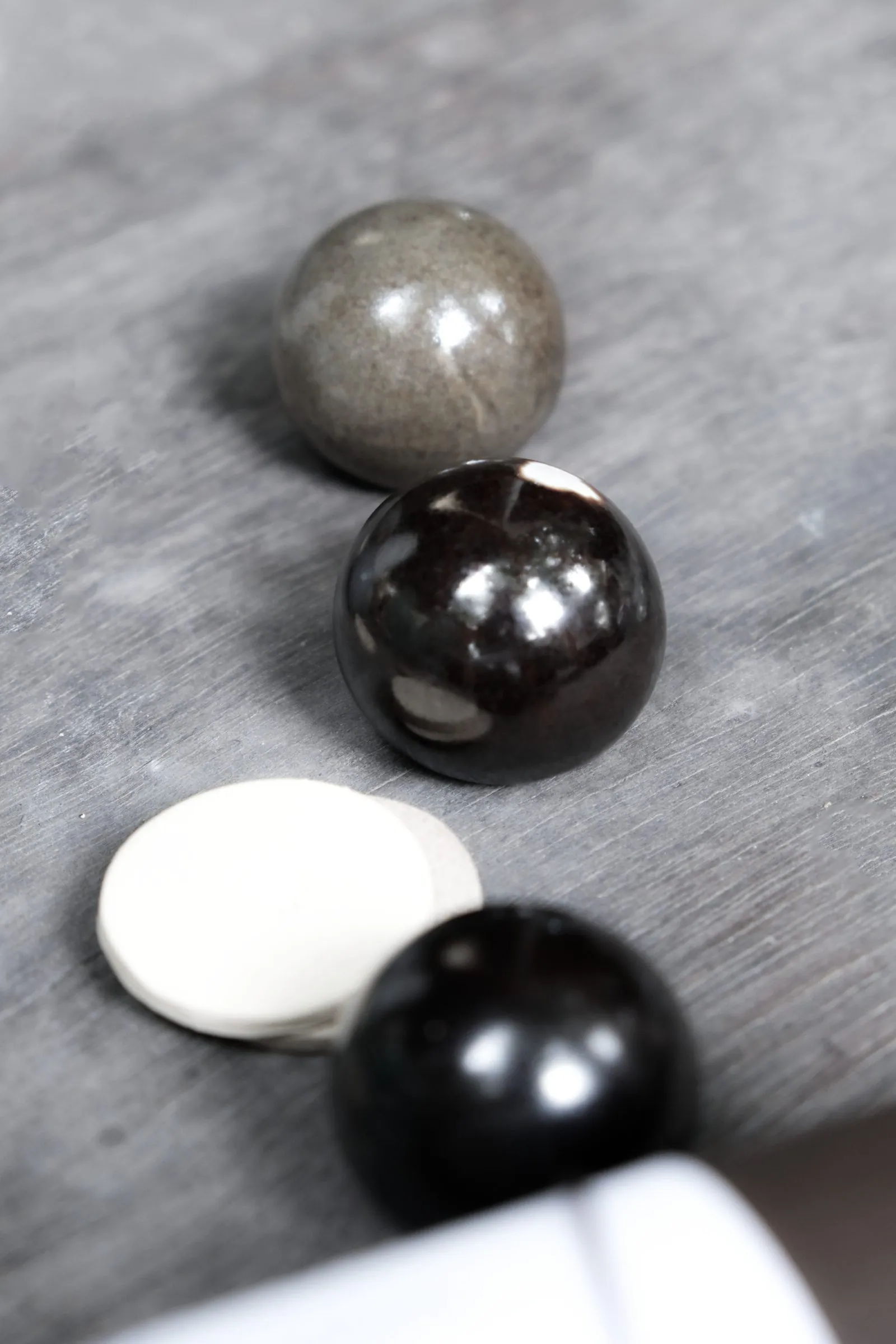
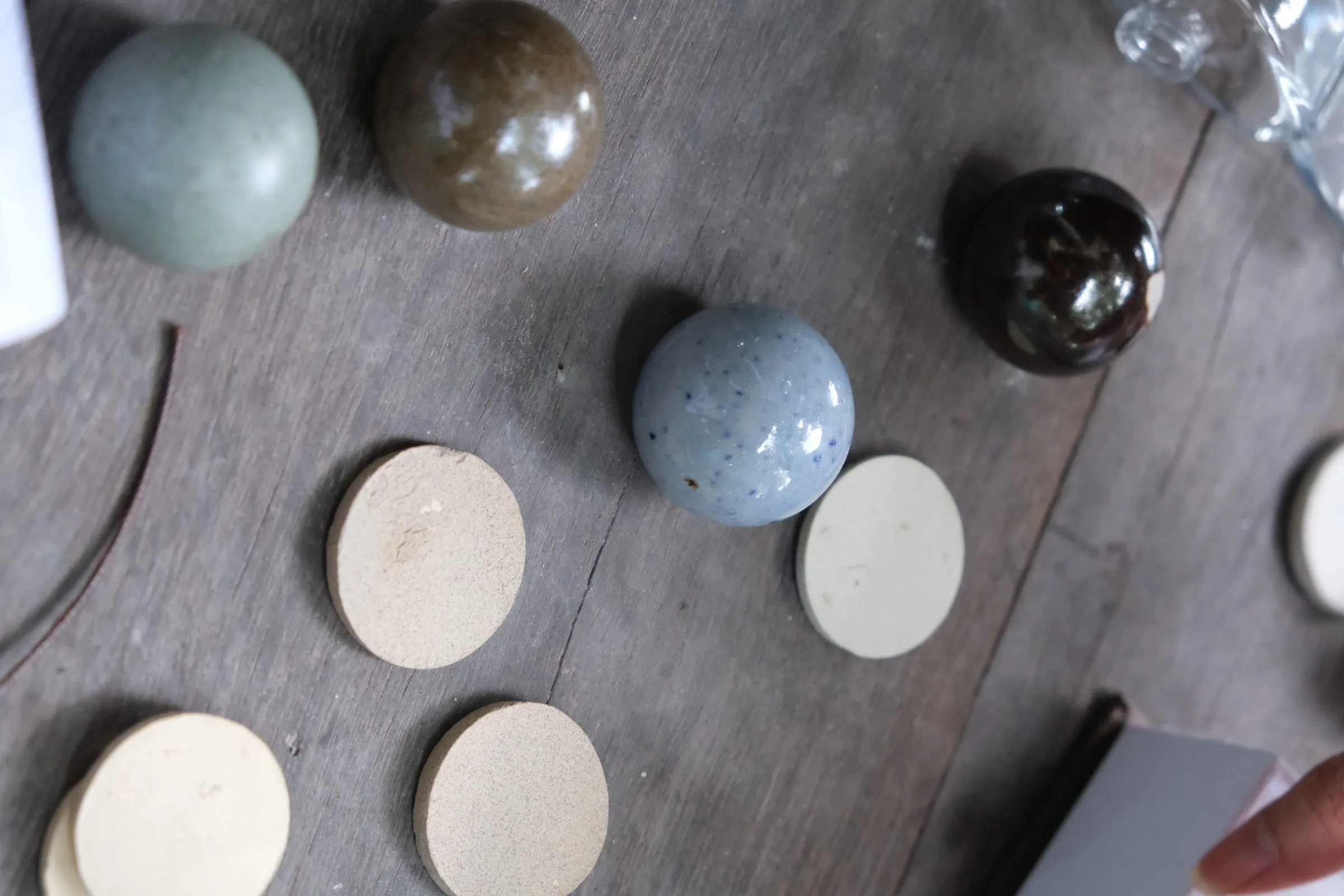
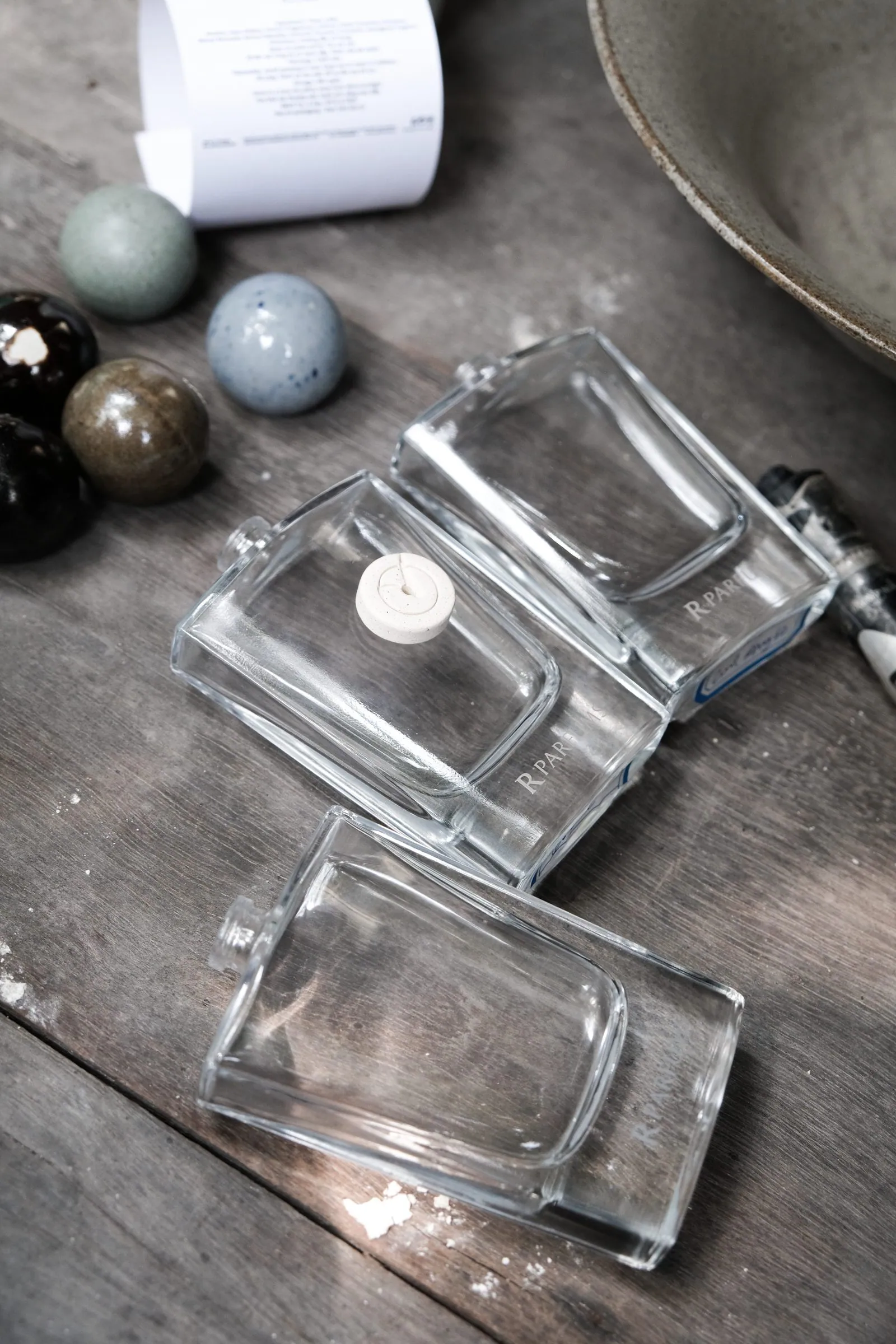
Out of the fire come colours the pink gave no sign of: blue-grey, brown, glossy black, a speckled blue. The same glaze can come out differently from one firing to the next, and it shifts again with the light.
On your bottle
Each cap, its own shade of glaze
The kiln decides the glaze and the maker’s hand the tassel, so each Ceramic bottle comes to you as it was finished.
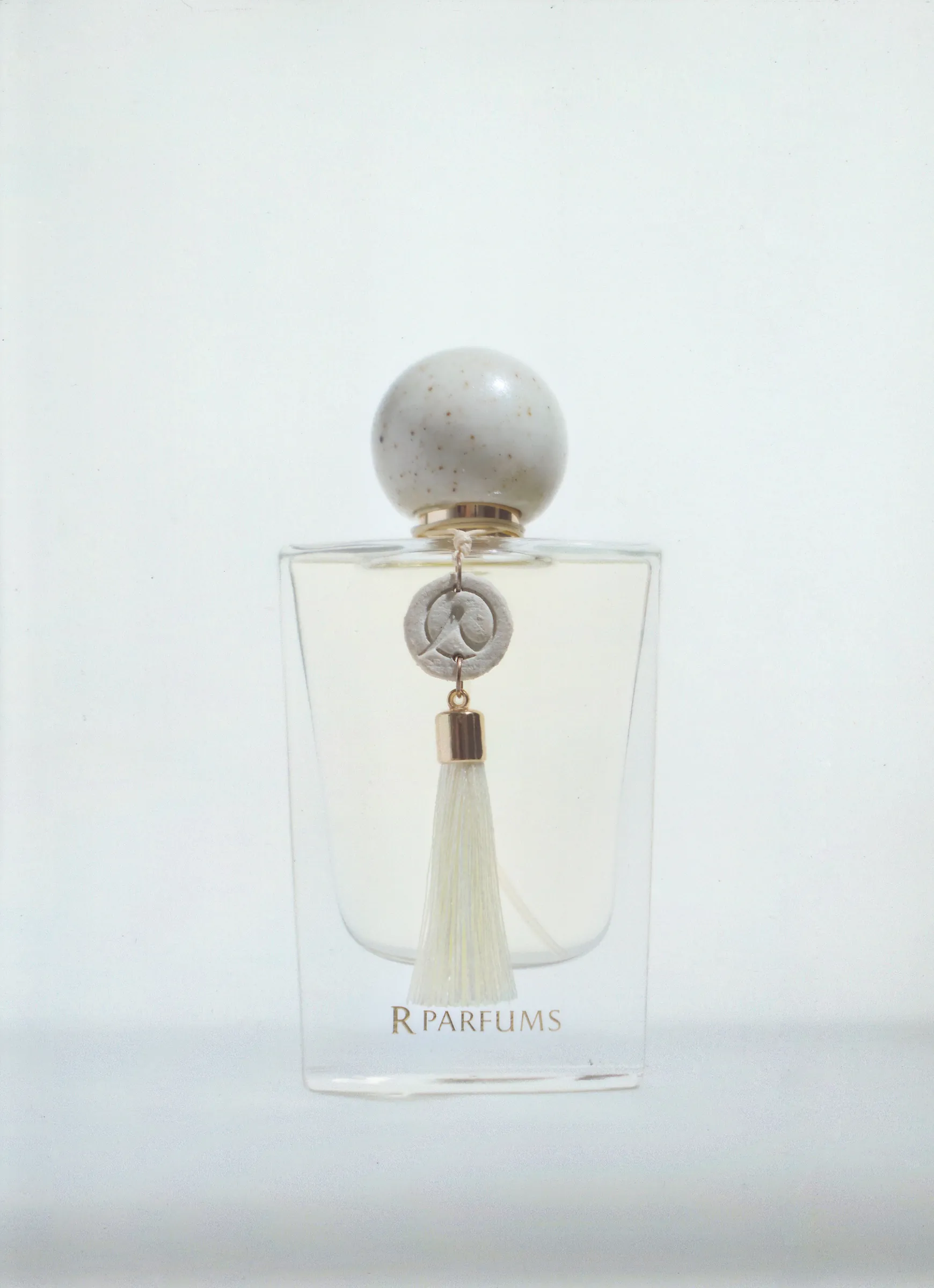
Every Ceramic bottle carries a ceramic charm engraved with R.
VIII
Dressed
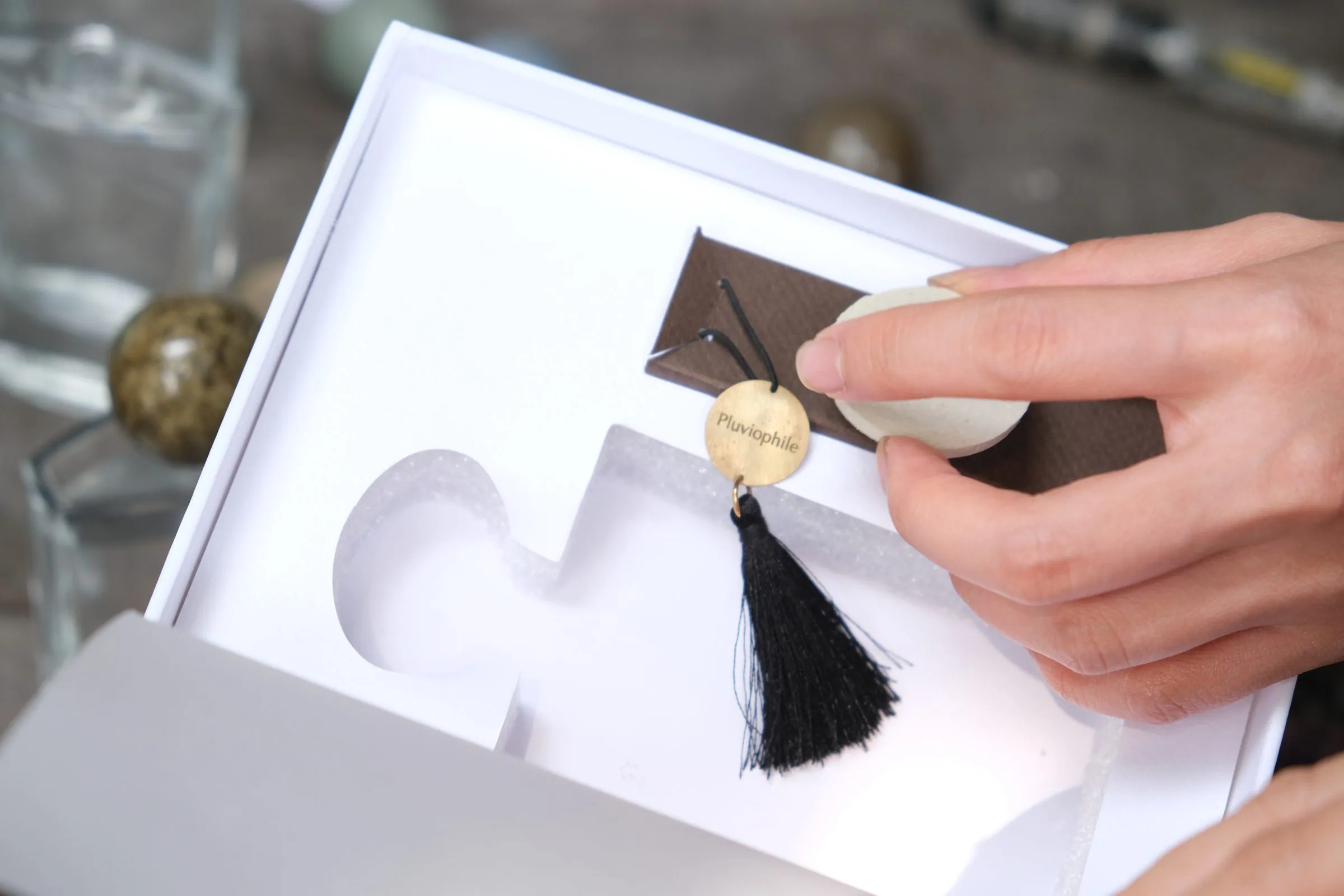
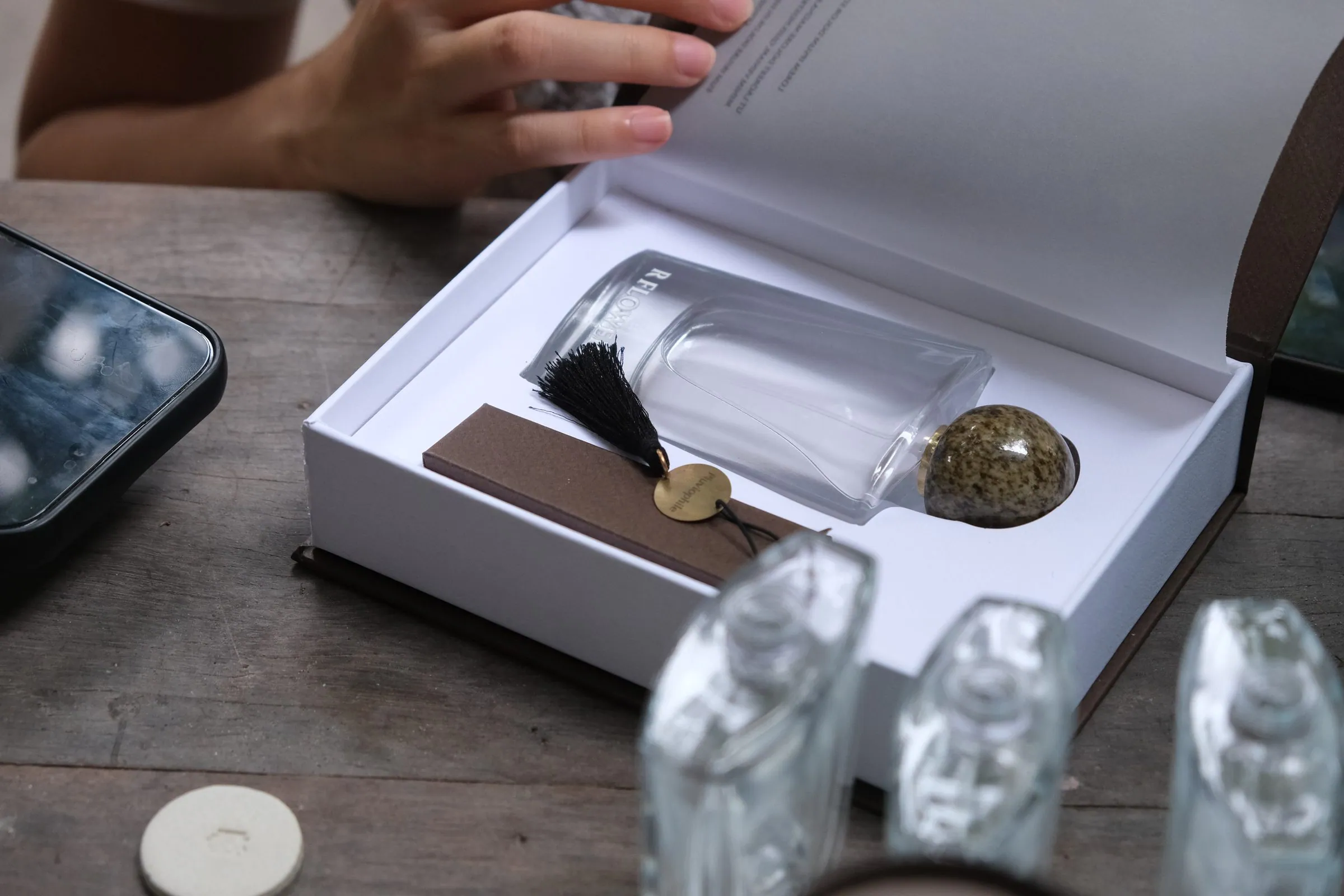
On the bottle, the cap is joined by its tassel, finished by hand, and a small ceramic charm engraved with R. Then the bottle goes into its box.
Clay, glass, a tassel, a charm, a box.
- Tassel
- Finished by hand, each its own
- Charm
- Ceramic, engraved with R
- Box
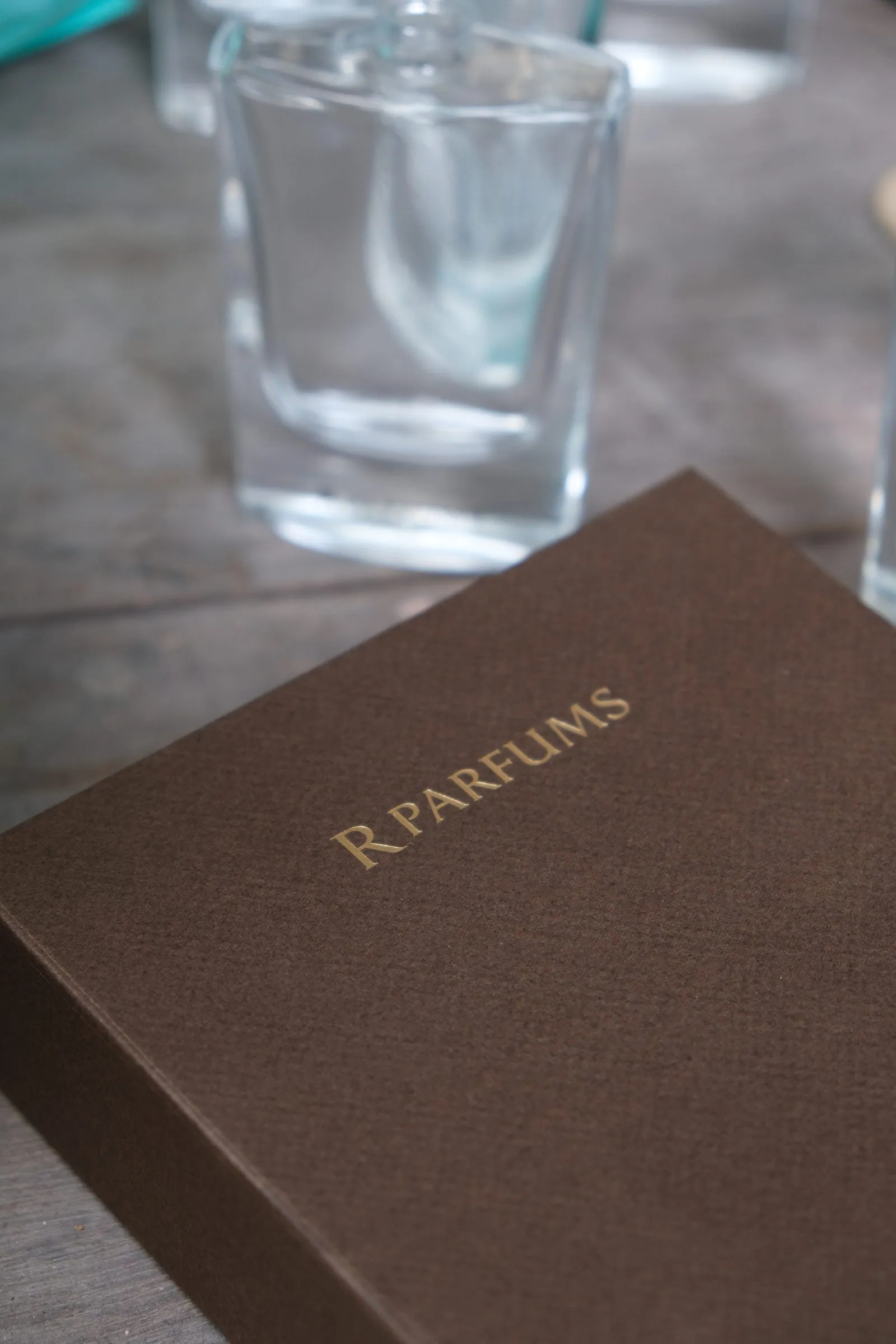
- A white box with a fitted insert, and a brown box printed R PARFUMS in gold
Film
Ceramic and fire
Cut from footage shot at the studio where our caps are made: the clay, the moulds, the hands, the kiln.
About the film
A silent film shot at a ceramics studio in Vietnam, where our caps are made. It opens on the long worktable and a slab of fine clay. Liquid clay is poured into white moulds, the excess tipped back out, the halves pulled apart. Each small sphere has its mouth cut and is wiped smooth with a sponge, then left in rows to dry. The raw glaze goes on pink. The spheres are stacked on kiln shelves and fired. What comes back is blue-grey, brown, glossy black. Last, a ceramic disc engraved with R and its tassel are set into the box beside the bottle.
Ceramic · 50 ml · six scents
Six scents, each under its own cap
Six scents wear this bottle. Choose yours.
The scent inside is the same as in the Patina bottle. What changes is the cap.
The other bottle keeps time in brass: three pieces, corroded, filed and polished.
At a glance
- Line
- Ceramic, one of two 50 ml bottles (the other is Patina on Brass)
- Cap
- A clay sphere formed from liquid clay poured into a white mould, its mouth cut one at a time, its surface wiped smooth
- Glaze
- Brushed on raw and pink; the fire brings out the colour. The glazes recall Chu Đậu ware
- Firing
- In a kiln, after the glaze goes on ( step VI)
- Colour
- Changes from one firing to the next, and with the light
- Charm
- Ceramic, engraved with R
- Made at
- A ceramics studio in Vietnam
- Scents
- Eau de Hajime · Pluviophile · Nostalgic March · 221B · Shadow Éclat · Béton Chaud
- To buy
- The Ceramic collection, six scents in 50 ml
- See it first
- At our three houses in Ho Chi Minh City, open daily
- Delivery
- Within Vietnam only
- Film
- Ceramic and fire
Questions about the ceramic cap
Why might my cap look a little different from the photographs?
Glaze colour changes from one firing to the next, and it shifts with the light. The photographs on this site are a guide to colour, not an exact match.
What decides the glaze and the tassel on my bottle?
The kiln sets the glaze and the maker’s hand the tassel; neither colour can be requested. Only the scent is yours to choose. Every Ceramic bottle carries a ceramic charm engraved with R.
“…the fire-kissed surface of ceramic – the way time leaves its fingerprints.”
Try the six at our houses
All six scents are at each of our three houses in Ho Chi Minh City to try on skin, open every day. Ceramic arrives at the houses in late November.
- I · Nguyễn Duy Hiệu34 Nguyễn Duy HiệuOpen daily · 8:00–18:00
- II · Nguyễn Huệ42 Nguyễn Huệ, Level 2NOTE – The Scent Lab, Level 2 · Open daily · 9:00–22:00
- III · Lý Tự Trọng26 Lý Tự Trọng, Level 3Saigon Scent Lab, Level 3 · Open daily · 9:00–22:00