
Craft · two bottles, both 50 ml
Brass and Fire
A perfume keeps its own clock: it opens on the skin by the minute, then by the hour. The Patina bottle keeps a second, slower clock, counted in months and years. The Ceramic bottle does not count time; it holds the mark of a single firing.
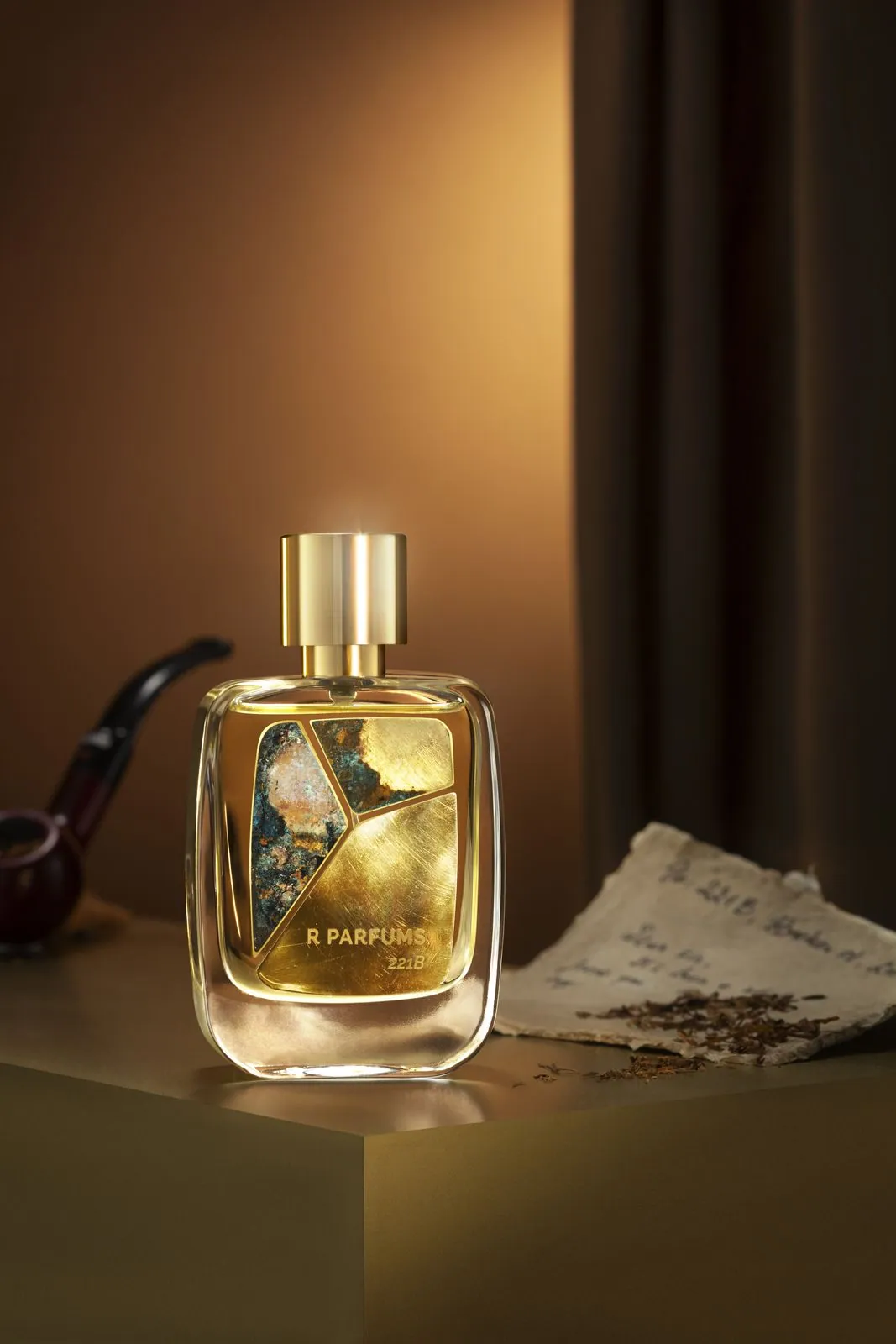
R Parfums, an independent fragrance house from Saigon, Vietnam, gives each scent two 50 ml bottles of equal standing. The Patina bottle carries three hand-finished pieces of brass, corroded, filed and polished in Vietnam. The Ceramic bottle has a spherical ceramic cap, cast in a mould, trimmed one by one and fired in the kiln, its glaze recalling Chu Đậu pottery. The scent inside is the same.
Part I · Patina · brass and the years
Patina
Three pieces of brass, corroded, then filed and polished, sit flush against the 50 ml glass bottle. Each plate is one of a kind, for one owner.
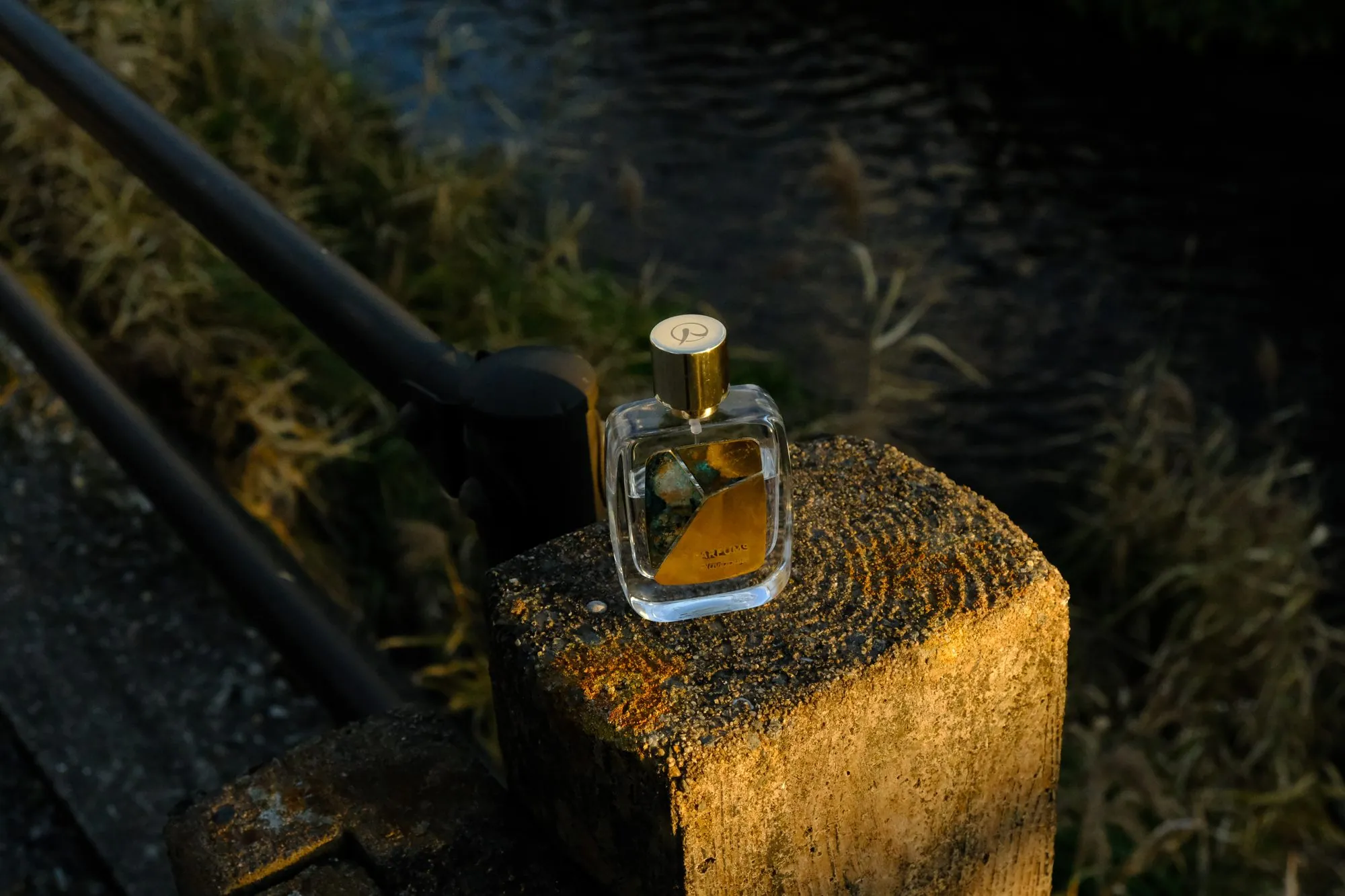
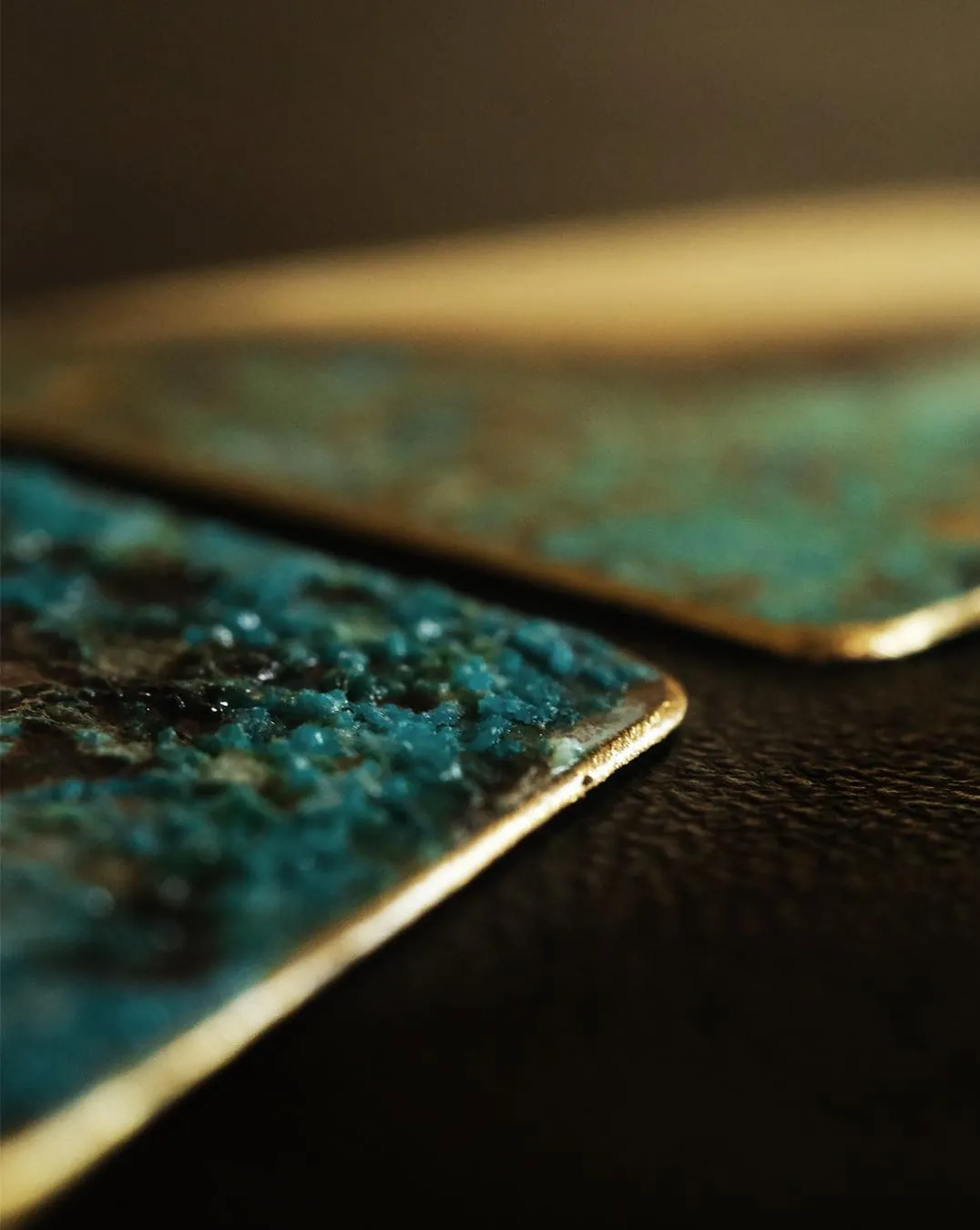
Inspired by Huế, the old imperial capital
From idea to jewellery
On a visit to Huế, the old capital, we stood a long while before its relics: traces of moss, metal worn into streaks. People treasure old things for the years left in them.
Twelve months of research and development on the Patina line brought those marks of time to the perfume bottle, as a small piece of jewellery.
How a plate is made
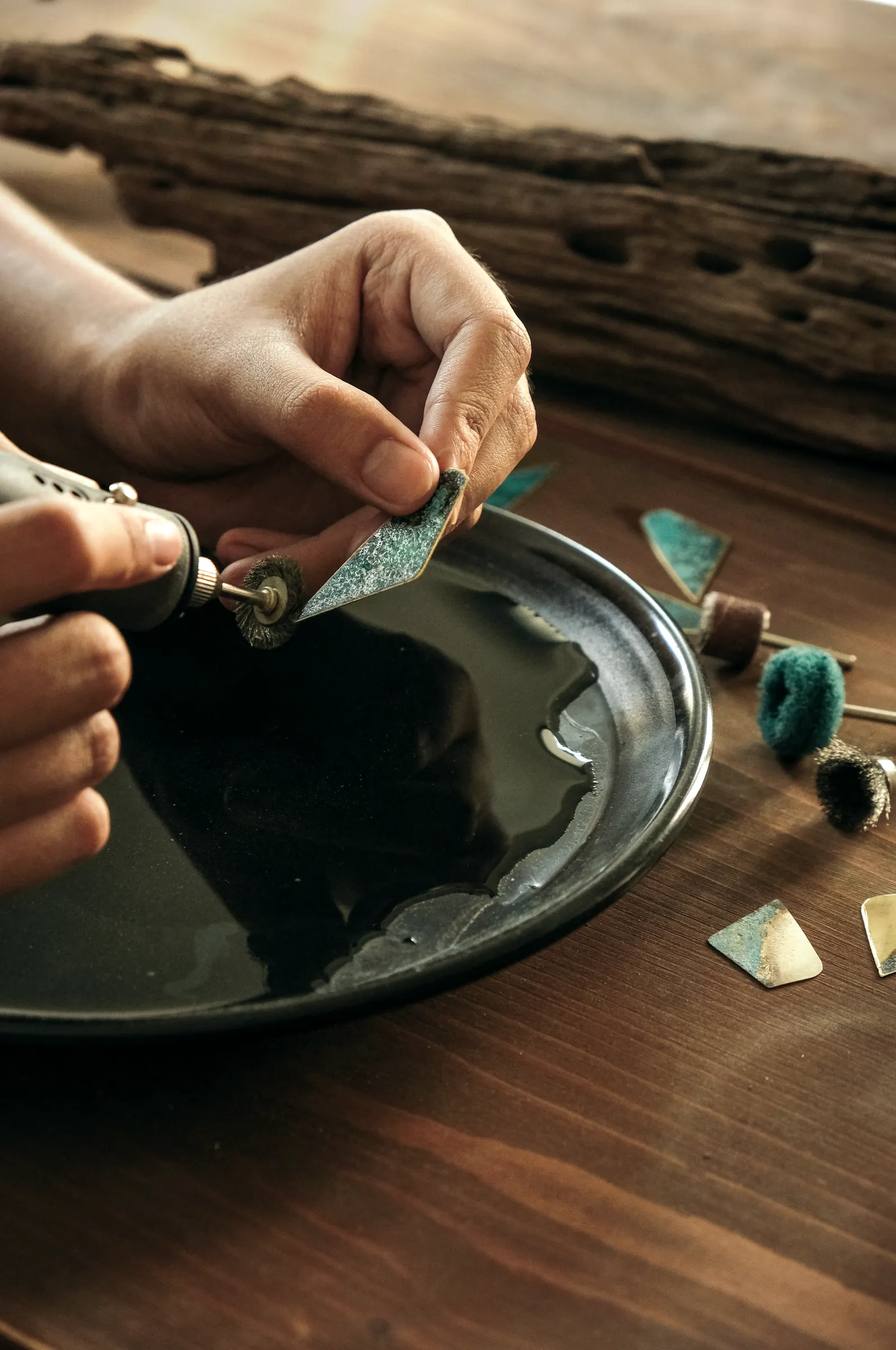
The brass is warmed, then coloured with thin washes of oxides and metal salts, by brush, spray or sponge; each piece is then filed, set on the glass and sealed under a UV-resistant coat.
The clock in the brass
Three pieces, three moments
Patina is easily mistaken for decay. It is in fact a natural film: this “corrosion” keeps the brass from corroding in earnest.
- I · Brass
- Keeps the colour of the brass as it was on the day the bottle reached you.
- II · Turning
- The living piece: it goes on changing colour on your table, under the UV-resistant coat.
- III · Patina
- The craftsperson took this piece the whole way before setting it on the bottle.
The day the bottle reaches you
Piece I is still raw brass. Piece III is fully patinated. Piece II is partway between.
Six months on your table
The light, humidity and temperature of the room slowly write on piece II, in its own time.
Once around the sun
Two bottles bought on the same day, kept in two different homes, will go their separate ways.
Three years in your hand
The brass carries the mark of your room, and no one else’s.
Ten years, a small keepsake
Patina does not harm the brass; it shields it. The bottle is long empty, and the brass remains.
Two pairs of hands
One perfumer, and the people who work the brass
Rei Nguyen makes the scent. The brass is the work of craftspeople in Vietnam, from the first layer of solution until the three pieces lie still on the bottle.
“Each patina piece on every bottle of R Parfums is one of a kind, made for a single owner.”
Kintsugi: three separate pieces, one whole
As kintsugi mends broken pottery with gold, the gold of the perfume inside joins three seemingly separate pieces of brass into one.
Film
The Patina Bottle
Series #1
Series #1 — The Patina Bottle: the first film in R Parfums’ craft series, following the brass from the first day to today.
Part II · Ceramic · clay, glaze and fire
Ceramic
The cap of the Ceramic bottle is a small sphere of clay: cast in a mould, trimmed, dried, glazed and fired in the kiln. The glaze recalls Chu Đậu pottery; its colour shifts with the light and from one firing to the next.
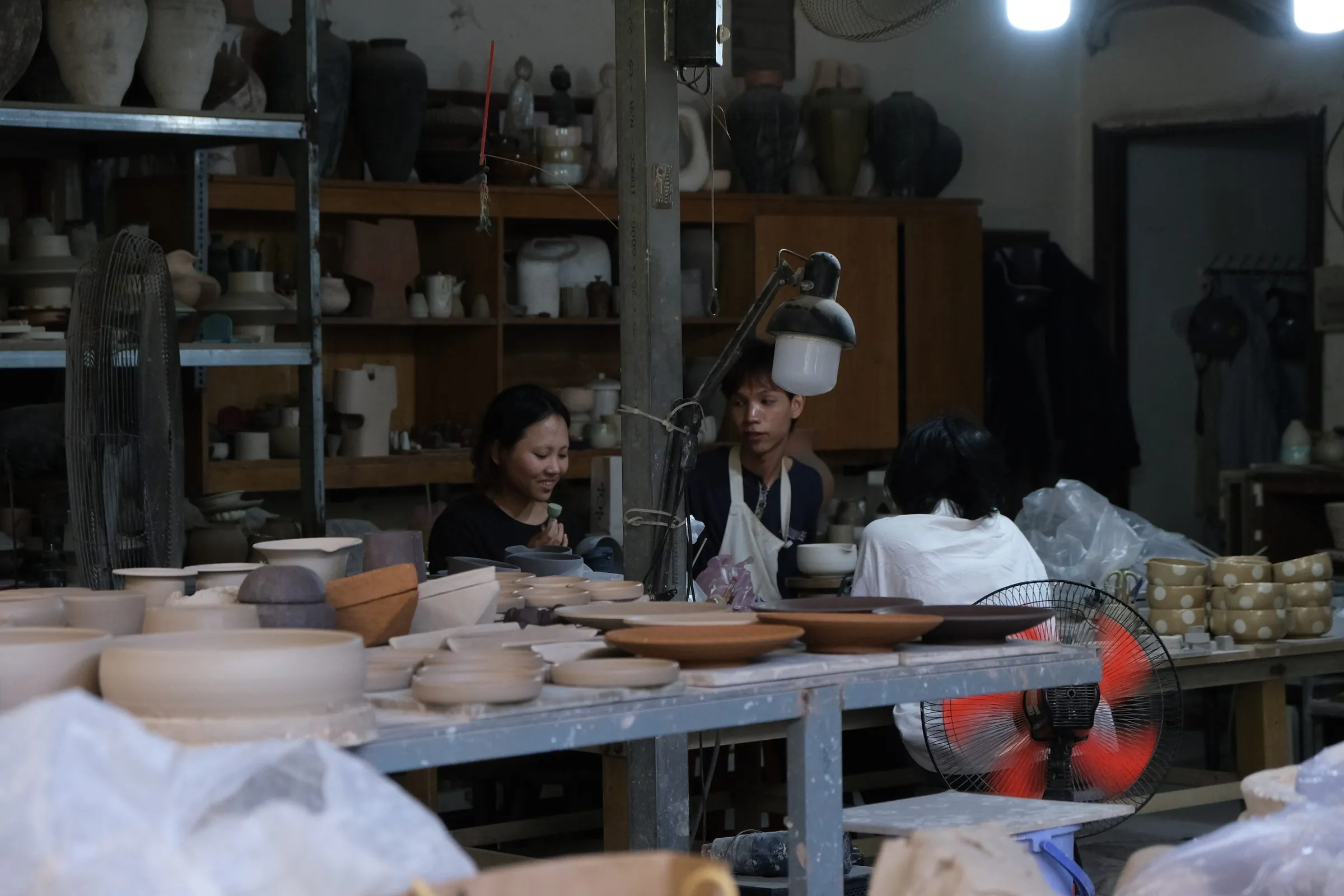
How a Ceramic cap is made
From clay to glazed cap
The photographs follow the order of the work. Raw glaze goes on pink; only the fire brings out its true colour on the cap.
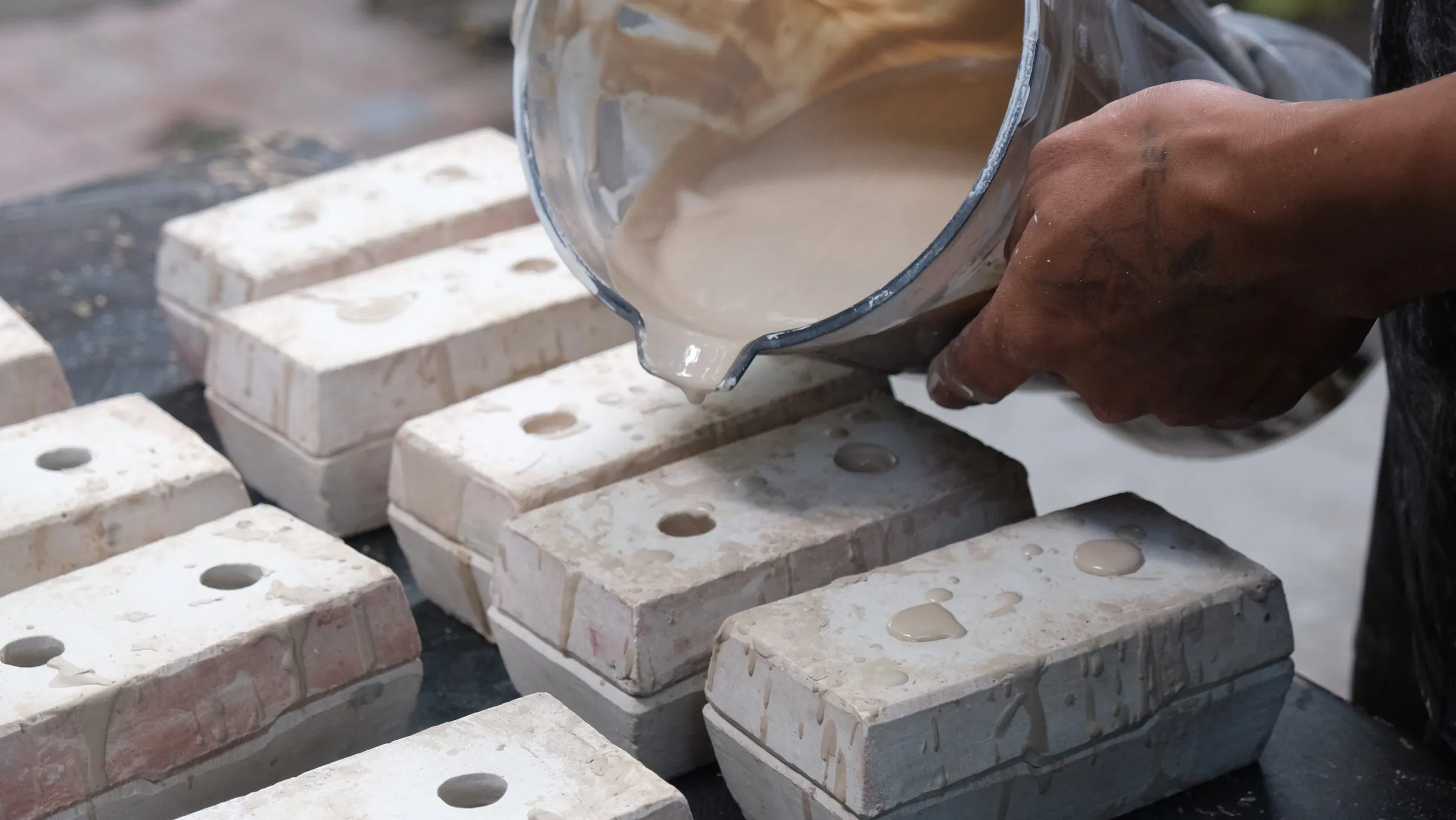
Casting
Cream slip is poured from a jug into the row of moulds.
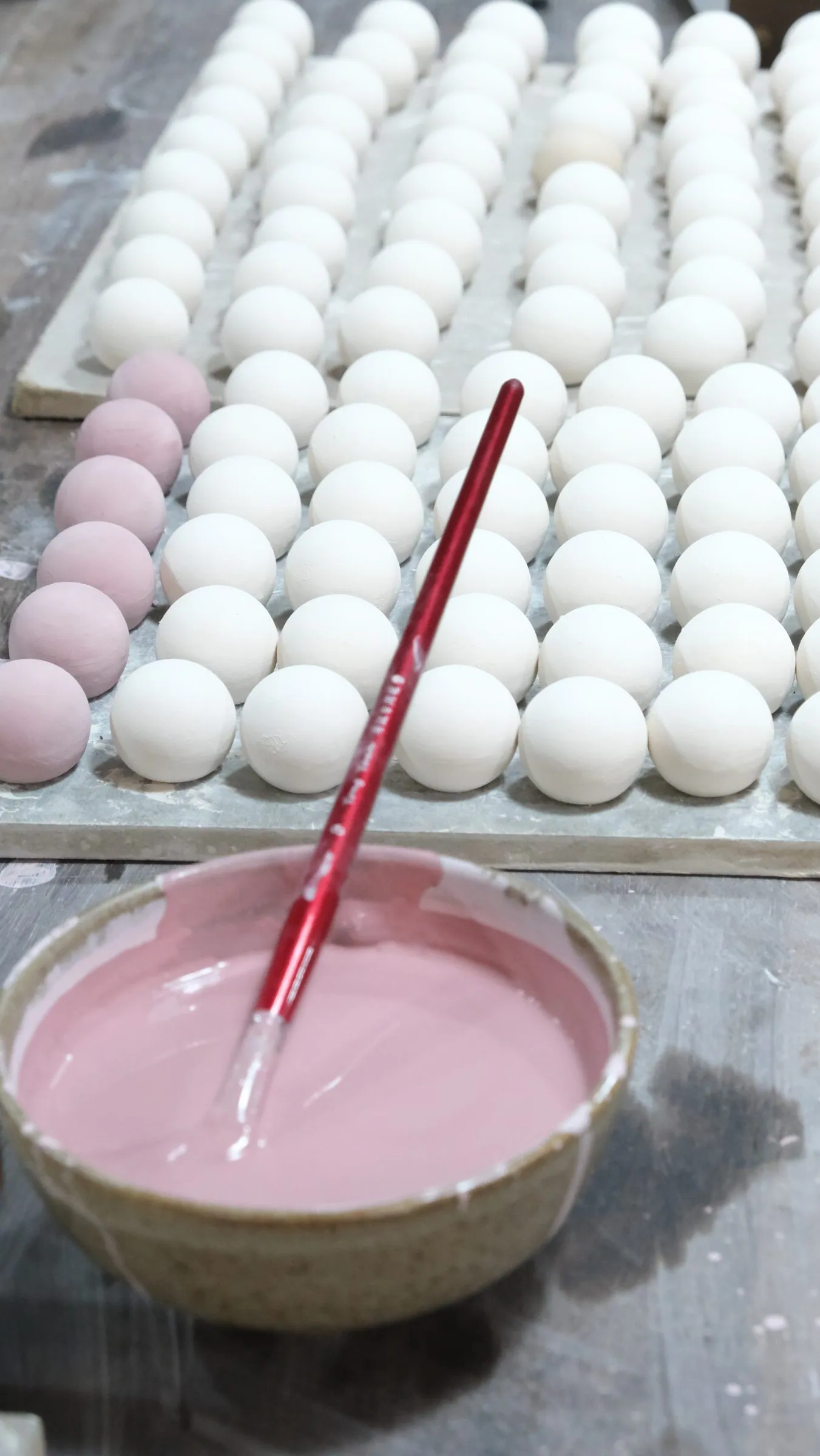
Glazing
Raw pink glaze, brushed onto each row of spheres.
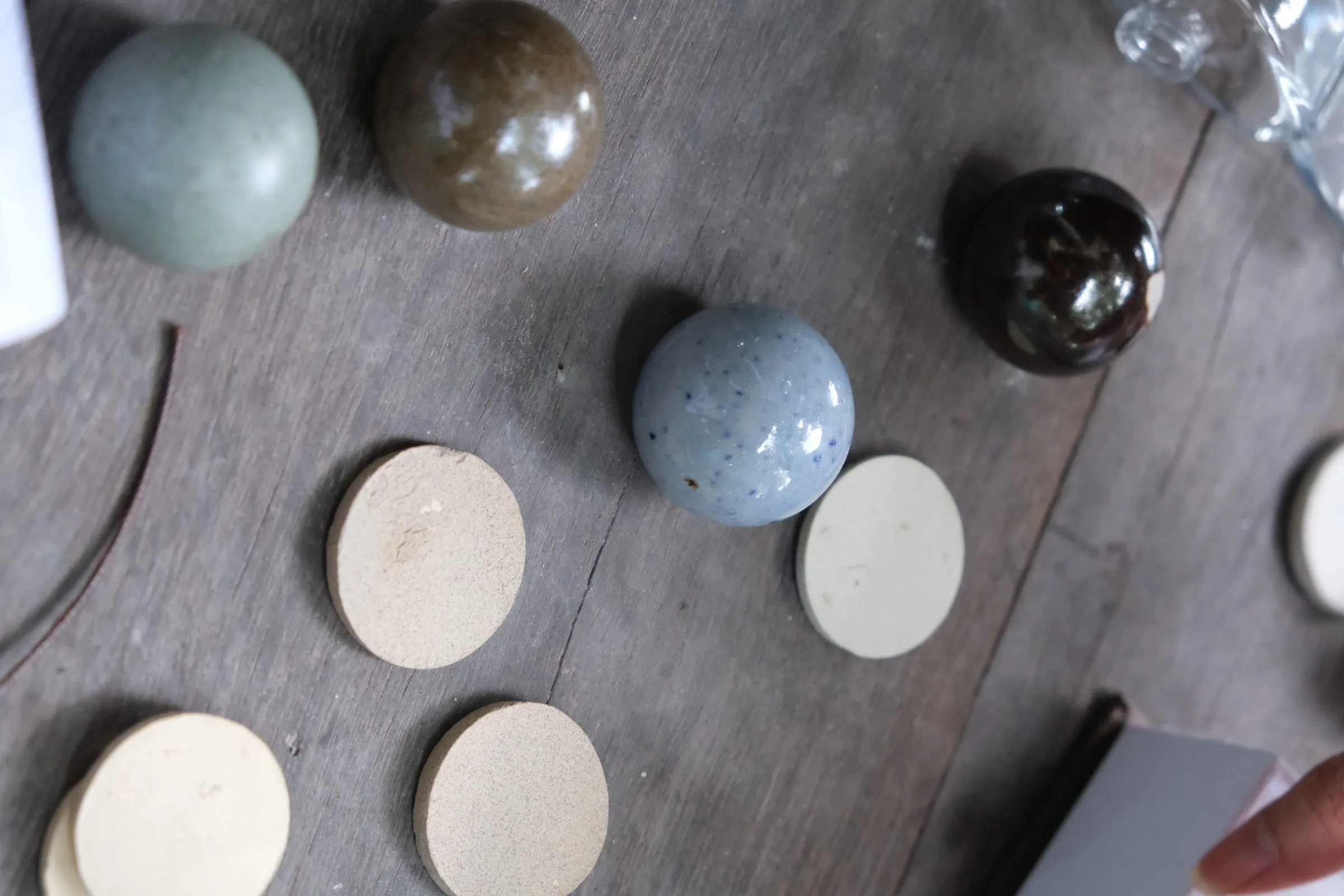
Out of the kiln
The glaze has found its colour: grey-green, brown, glossy black, speckled green.
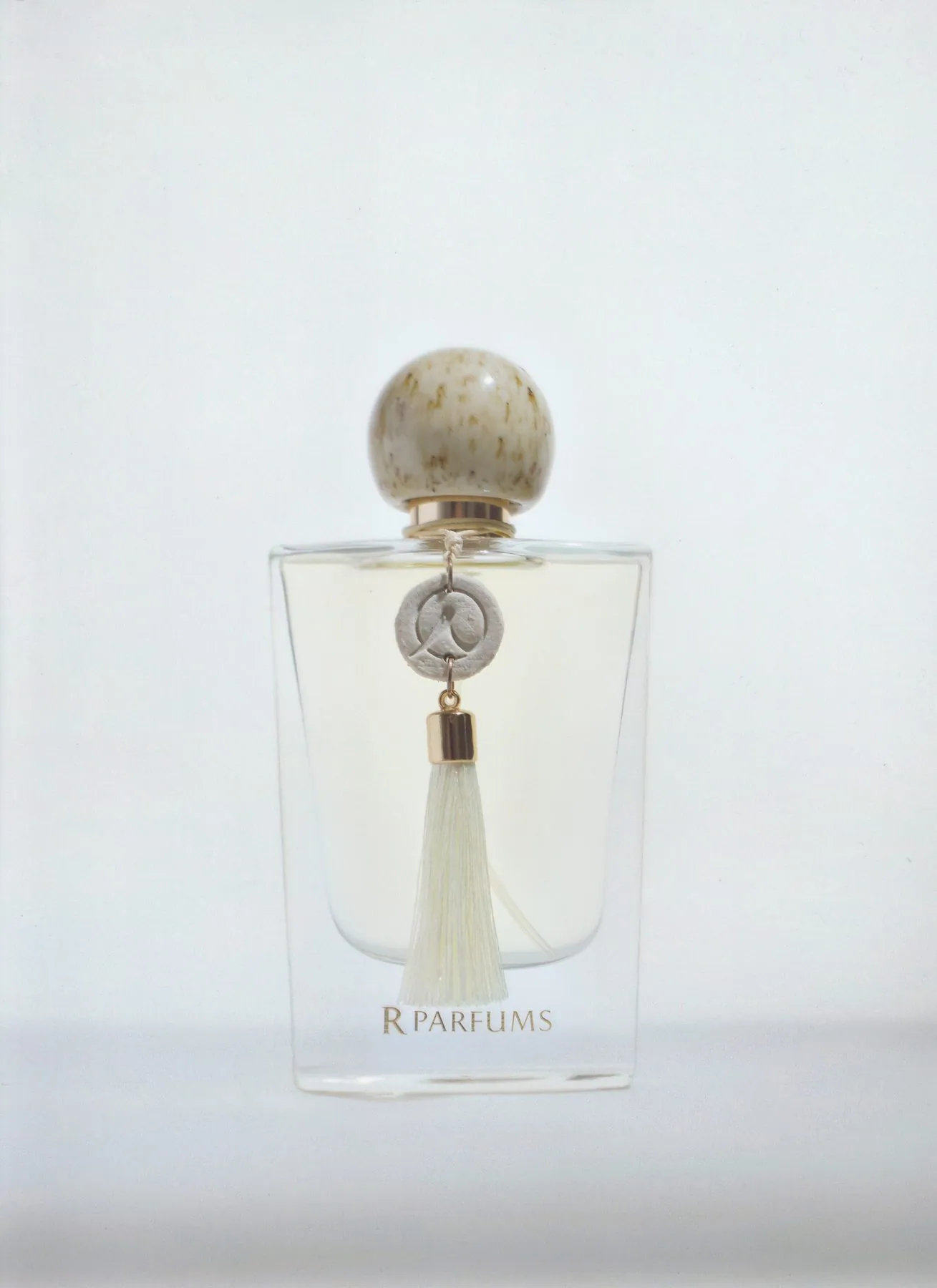
Glaze and tassel
Each cap, its own shade of glaze
The kiln decides the glaze and the maker’s hand the tassel, so each Ceramic bottle comes to you as it was finished.
The glaze colour shifts with the light and from one firing to the next, so there is no colour code. Each Ceramic bottle comes with a ceramic charm engraved with an R.
Two pairs of hands
One perfumer, and the people who work the clay
Rei Nguyen makes the scent. The ceramic cap is the work of a ceramics studio in Vietnam, made in batches; every cap passes through human hands, from wedging the clay to opening the kiln.
Tassel and charm
A round ceramic charm, engraved with an R, comes with its tassel, finished by hand. The last step is the box: bottle, cap, tassel and charm, each laid in its own hollow, one at a time.
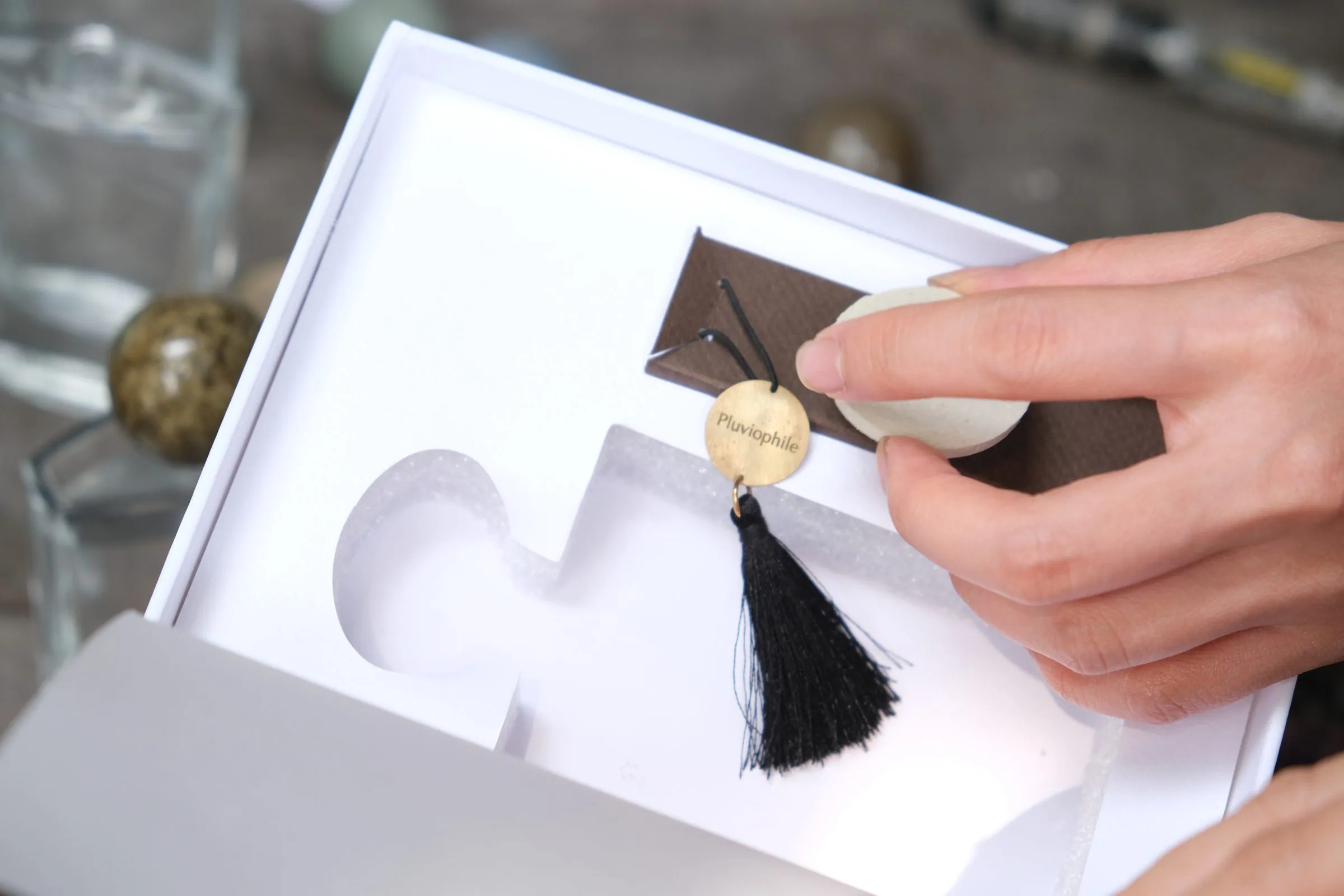
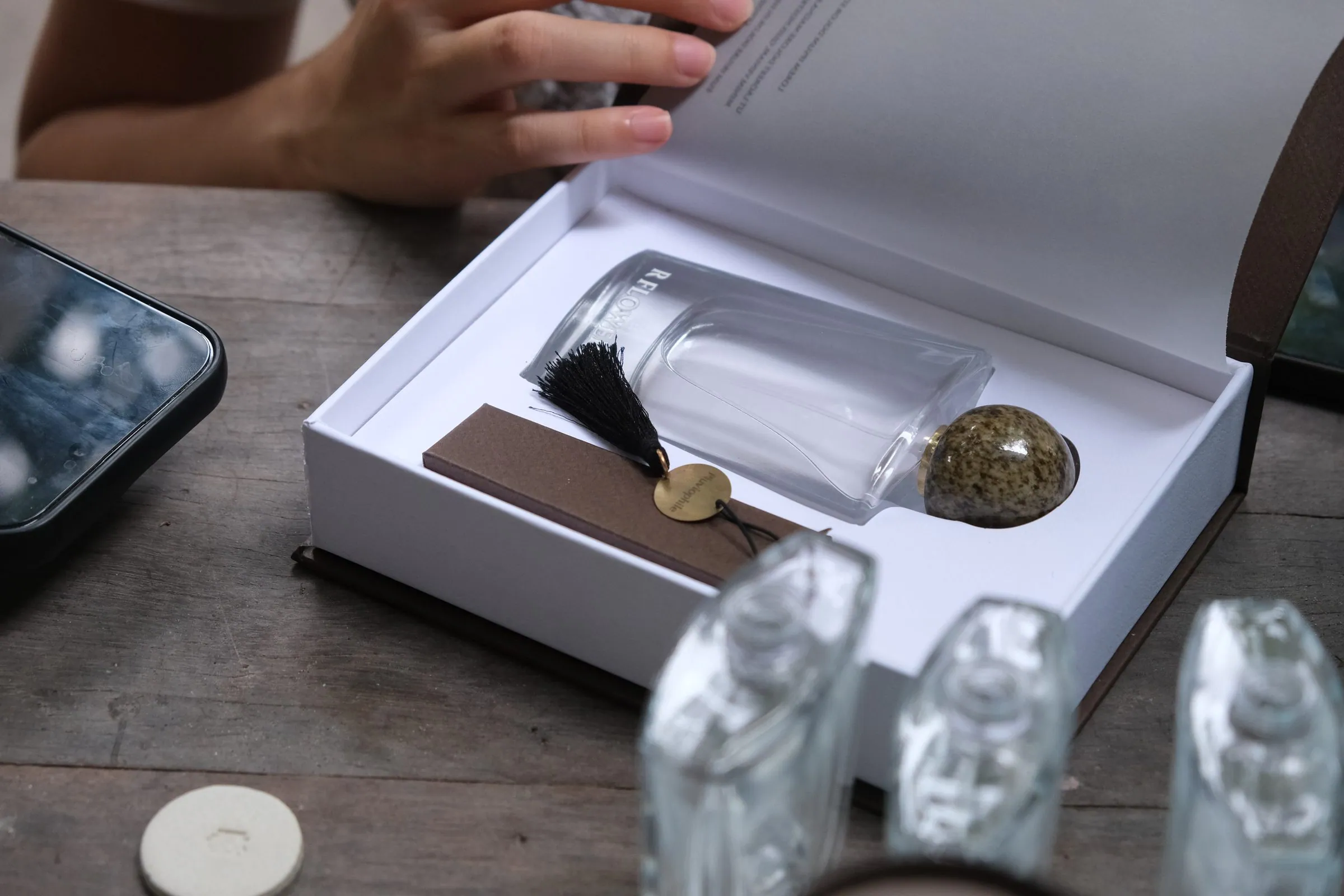
Film
Ceramic and fire
Footage from the pottery studio
Cut from footage shot at the studio that makes the ceramic caps for R Parfums. A silent film that plays only when you press play.
About the film
The film follows one batch of ceramic caps from start to finish: the studio; wedging the clay; the moulds; pouring slip into the moulds; trimming and wiping each sphere; drying; brushing on raw pink glaze; loading the kiln; the spheres after the fire, in their true glaze colours; fitting bottle, cap and tassel into the box; the finished cap.
In brief
The two bottles at a glance
- Two lines
- Patina and Ceramic: both 50 ml, the same scent inside. All six scents come in both.
- Patina
- Three hand-finished brass pieces, corroded, filed and polished, then set on the glass under a UV-resistant coat. How the brass plate is made
- Ceramic
- A clay cap cast in a mould, its mouth cut one by one, fired in the kiln, its glaze recalling Chu Đậu pottery; glaze by the kiln, tassel by hand; a ceramic charm engraved with an R. How the ceramic cap is made
- Perfumer
- Rei Nguyen
- Films
- Series #1 — The Patina Bottle (YouTube) · Ceramic and fire (1:29, silent)
- See them in person
- Three houses in Ho Chi Minh City, open daily.
- Delivery
- Within Vietnam. Payment by bank transfer via VietQR (VND) or by credit card (USD).
Questions
How do the Patina and Ceramic bottles differ?
The same scent inside, the same 50 ml. Prices include 8% VAT.
Does the brass on the Patina bottle change colour?
Yes, very slowly, even after the bottle is yours.
Does patina damage the brass?
No. Patina is a film that forms on the surface of the metal as it oxidises. That film shields the metal beneath, keeping true corrosion from damaging the plate.
How is the ceramic cap made?
Liquid clay is poured into a mould and comes out as a sphere, which is trimmed and opened one by one, dried, glazed and fired in the kiln. The glaze recalls Chu Đậu pottery; its colour shifts with the light and from one firing to the next.
What decides the glaze and the tassel on my bottle?
The kiln sets the glaze and the maker’s hand the tassel, so no two Ceramic bottles are alike. The Patina bottle is the same: each carries its own brass plate and is one of a kind. Only the scent is yours to choose.
Where can I try the six scents in person?
Try all six on skin at our three houses in Ho Chi Minh City, open daily.
Brass dressed in patina, clay coloured by fire: two ways time leaves its fingerprint.