Craft · 2025
Agarwood, Koudou and Incense: Philosophy, Artistry, and Subtle Beauty
- Published
- Language
- English
- Reading time
- 3 min
First published on 21 April 2025, kept as it was written.

Agarwood and the Art of Incense: The Language of Spirit and Tradition
In the incense traditions of Vietnam, Japan and China—where introspection, restraint, and mindfulness are deeply valued—fragrance is more than a sensory experience. It becomes an invisible language, connecting humans to nature, the inner self, and the spiritual realm. Unlike in the West, where perfumes often express personality and allure, fragrances in these traditions reflect inwardness—serving as a cultural, spiritual, and philosophical mirror.
The Philosophy of Scent in Incense Traditions
Agarwood – A Symbol of the Sacred and the Self
In countries like China, Japan, and Vietnam, agarwood has long symbolized spiritual purification. In rituals and meditative practices, its warm, resinous scent serves as a bridge between the human and the divine. In Buddhism, fragrance is seen as an “invisible offering” — a pure, formless gift that conveys intention. Each delicate wisp of incense carries a sacred energy that clears the mind and uplifts the spirit.
Koudou – The Japanese Art of "Listening" to Scent
In Japan, the appreciation of scent is elevated to an art form known as Koudou (香道) — the “Way of Incense.” Rather than simply “smelling,” one is invited to “listen” to fragrance, requiring mindfulness and deep intuition. In this practice, there are no “good” or “bad” scents — only meaningful sensory experiences. This perspective mirrors Japanese aesthetics, where silence, restraint, and imperfection are celebrated as refined beauty.
Incense in Scholars’ Studies and Zen Halls
From ancient Chinese scholars’ studies to Zen monasteries, scenting spaces with incense has long served to cleanse energy, stimulate thought, and foster spiritual serenity.



Aesthetic Values in the Art of Incense
The Elegance of Quietude and Suggestion
While Western perfumery often favors clarity and intensity, the incense traditions of Vietnam, Japan and China appreciate suggestion over declaration. A fragrance need not be bold to leave an impression — sometimes, a fleeting whisper of scent can evoke emotions that linger deeply. The wabi-sabi spirit of Japanese aesthetics — the beauty of imperfection — resonates through the way scent is crafted and experienced: gentle, contemplative, and rich with poetic nuance.
Harmony of Scent, Space, and Time
A distinctive aspect of these traditions lies in their holistic view — where scent is intrinsically linked with time, environment, and emotion. Scents are selected not merely for personal identity but also for the weather, occasion, and emotional context.
Perfumery Materials: Nature’s Legacy and Collective Wisdom
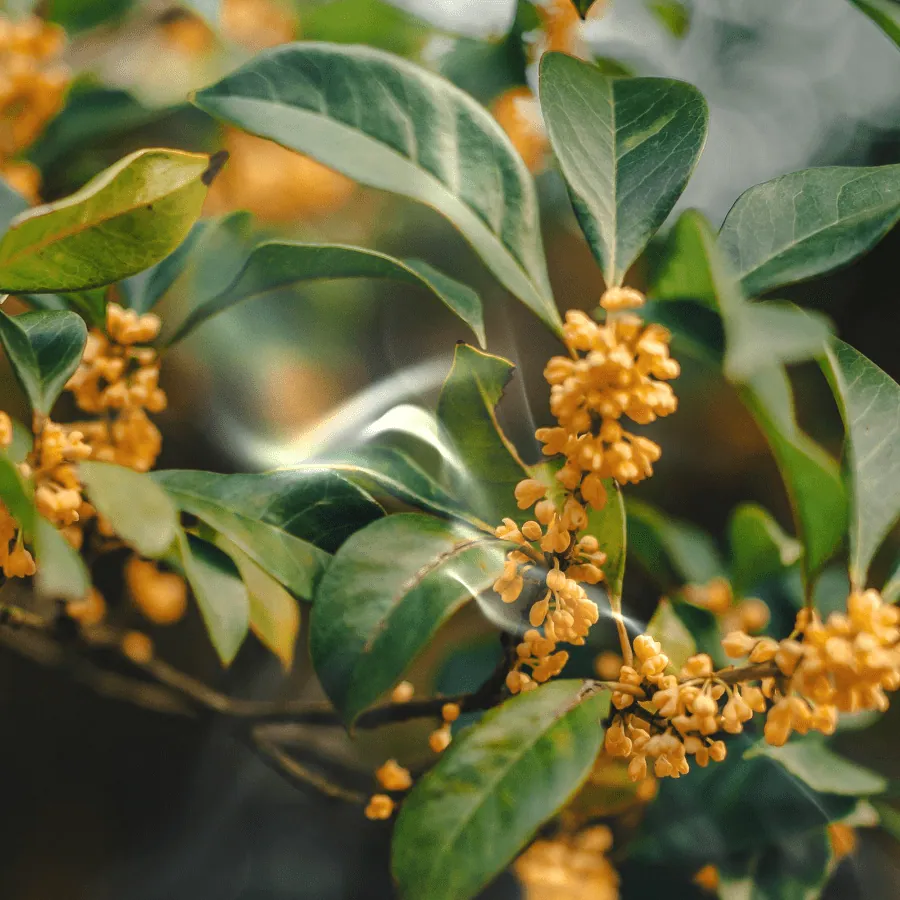
Natural ingredients such as agarwood, sandalwood, jasmine, osmanthus and citrus are more than materials; they embody deep cultural and spiritual meaning.
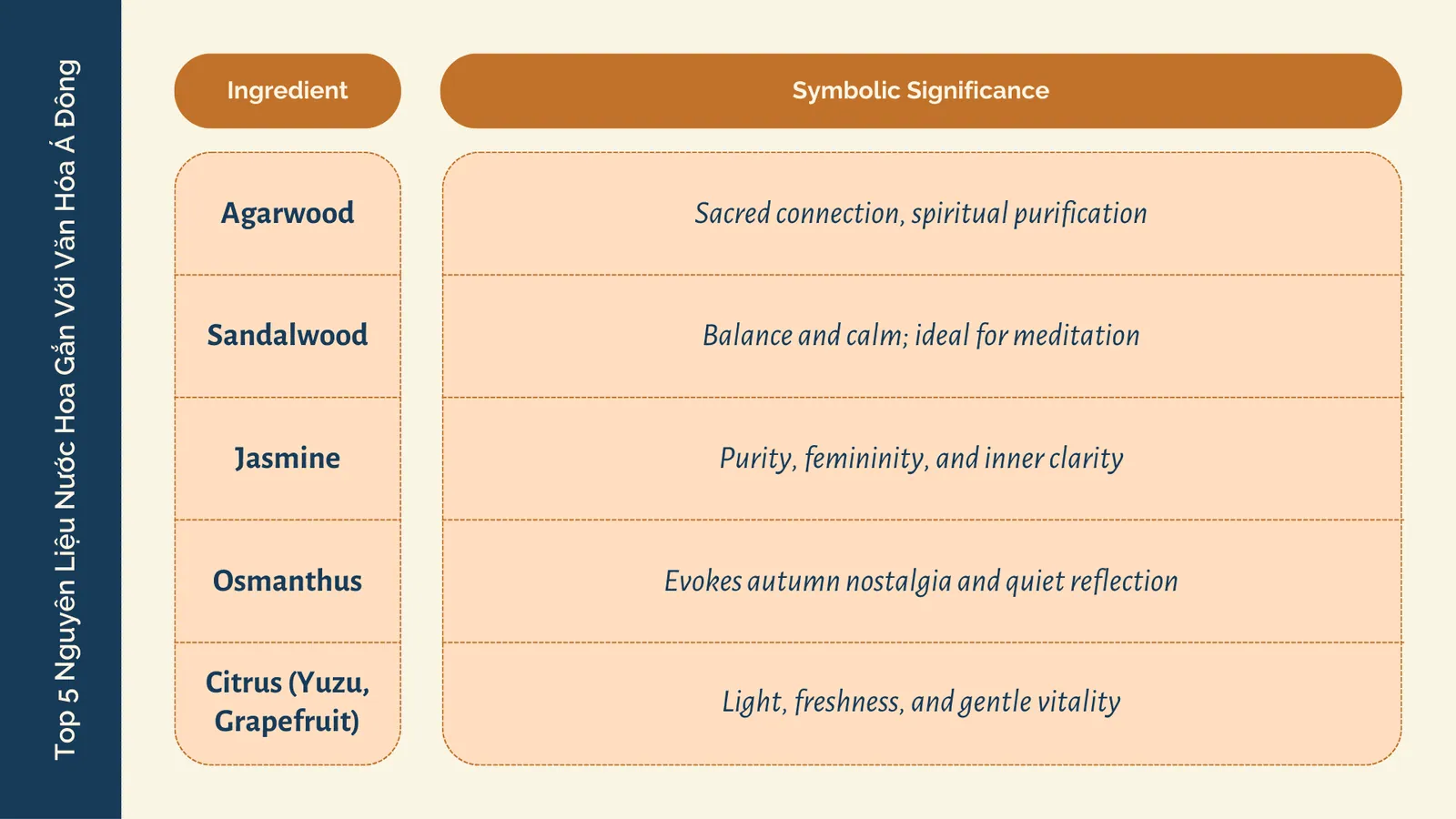
Using natural, artisan-sourced ingredients reflects not only ecological respect, but also preservation of cultural depth.
R Parfums: A Dialogue with Heritage Through Scent
At R Parfums, fragrance is not designed to please the market—it is crafted to converse with time, culture, and the wearer’s inner self. Each creation is a fusion of: Inspiration from agarwood, Koudou and the ritual of incense
Hand-selected ingredients, honoring nature and locality
A balance of contrasts: tradition and modernity, softness and sharpness
Rather than just a perfume, each bottle becomes a sensory narrative—a poetic space where scent preserves memory, evokes emotion, and speaks where words fall short.
Fragrance – A Gateway to Cultural Heritage
In the culture of incense, scent is a refined, wordless language that connects individuals to their inner world, to nature, and to the shared spiritual heritage of their community. In an age of modernization, preserving and reinterpreting this art of scent is not only an act of creativity—but a cultural responsibility. Through its devotion to craftsmanship and meaning, R Parfums is opening that very gateway—through scent.