Craft · 2025
Every Layer of Scent Is a Slice of Culture: Reading Rei Nguyen’s Olfactory Storytelling
- Published
- Language
- English
- Reading time
- 4 min
First published in Vietnamese on 26 April 2025. Translated in 2026 and kept to the original.

A slice of culture in every layer of scent at R Parfums
The opening layer: intuition meets memory
At R Parfums, the opening notes are the first thing to reach the nose — fleeting, yet strong enough to lead the whole journey. For Rei Nguyen, the top notes are not merely a greeting but the opening scene of a chapter told in scent, often calling up a cultural setting, a moment in time or a mood that passes quickly yet runs deep.
In Nostalgic March, an opening of pomelo blossom and fresh sugar cane does more than recall a spring in old Hanoi; it recreates the calm, refined culture of the festive-season rituals of the people of Tràng An, as Hanoi was once known. It is the season when pomelo blossom whitens the pagoda courtyards and young women in white áo dài go to pray at the start of the year. The scent is not simply botanical but a collective symbol, kept alive in the memories of many generations. Pluviophile, by contrast, opens with green leaves, rhubarb and the scent of rain: a quiet scene of Tokyo in the rain, where Rei once lived and studied. There, the sensibility of wabi-sabi — beauty in what is imperfect and fleeting — seeps into every drop of the scent, creating a deep, poetic stillness that has, in part, made R Parfums what it is.
The middle layer: culture crystallised into feeling
The middle notes are the heart of a composition — where feeling takes clear form and the character of the scent is set. Here, Rei Nguyen and R Parfums often build on contrast, florals set against woods and sweetness against spice, as her way of mirroring inner conflict and the subtle shifts in culture and the human mind.
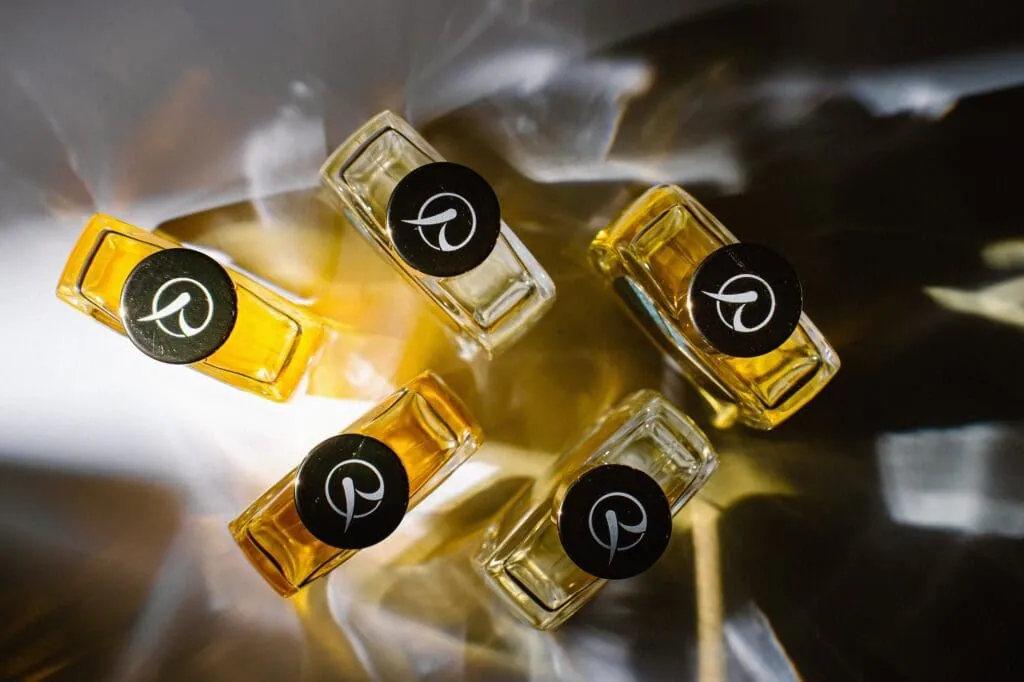
In 221B, the middle notes arrive with osmanthus absolute, geranium and rose — not only a classic picture of 19th-century England, but a symbol of the intellect, the discipline and the complexity of Sherlock Holmes’s character. Rei does not simply recreate the character; she calls up a deep culture of reading, a Victorian aesthetic sensibility in which logical thought and romanticism lived side by side. Béton Chaud, on the other hand, is a poem of childhood for a generation that grew up among concrete, cassette radios and 500-đồng ice lollies. Its middle notes of cumin, caramel and damask rose express a local identity steeped in memory: poor yet sweet, harsh yet warm. Rei is not simply making perfume; she is retelling the personal history of a generation through the lens of scent.
The base layer: lingering scent as a cultural signature at R Parfums
The base notes are the ending — where what remains settles, smoulders and endures. It is also where culture is distilled to its essence, reflecting the core values Rei Nguyen wants to pass on.
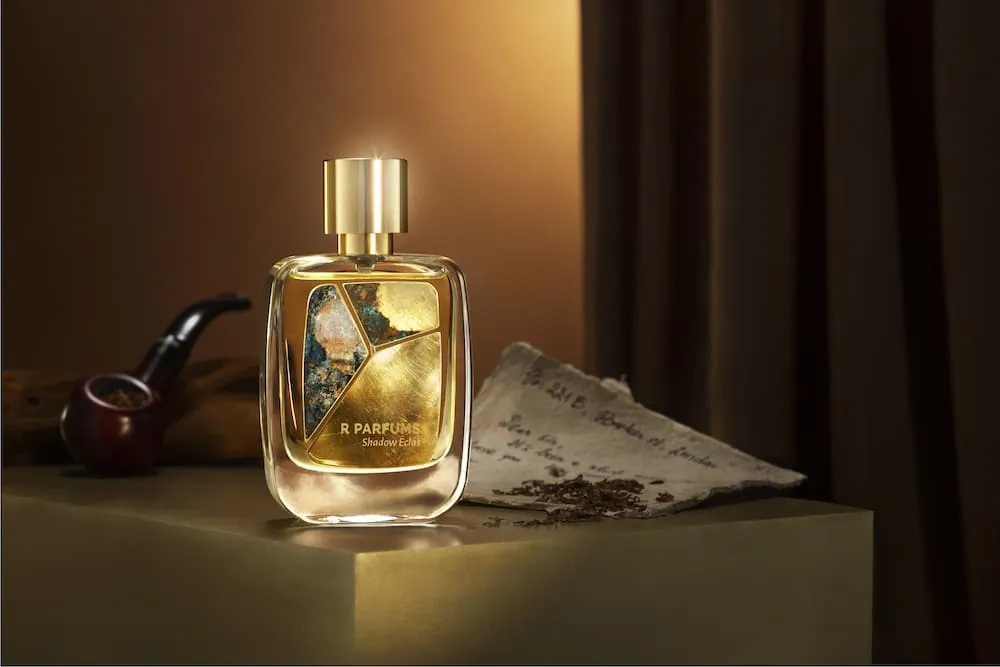
Shadow Éclat — a scent inspired by the villain Moriarty — closes with immortelle, black pepper, suede and leather. It is a dramatic base, recalling the philosophy of yin and yang and the spirit of “shadow and light”. Here Rei has built a “radiant darkness”, where beauty is imperfect yet profound and compelling. In Eau de Hajime, the base settles into moss, patchouli and resins, like the mark of a new beginning: simple, yet full of hidden meaning. “Hajime” means “beginning” in Japanese. For Rei, every beginning is a cultural expression of movement, in which people find themselves again through delicate slices of nature and time.
The three-layer structure of R Parfums as a form of storytelling
The three-layer structure of a perfume (top, middle and base) has long been the standard of the craft. In Rei Nguyen’s hands, though, that structure becomes a form of artistic storytelling: a gentle beginning, movement with depth, and a close that leaves a lasting layer of spiritual meaning. Contrast — stillness and motion, light and dark, soft and hard — runs through all of R Parfums’ creations. Rei does not make predictable scents; she builds a progression of sensations in which the wearer does not merely smell, but feels, thinks and contemplates.
Scent as a language of culture at R Parfums
Each bottle of R Parfums is a many-layered work, in which aesthetics, spirit and identity are woven together. For Rei Nguyen, the art of scent does not stand apart as a creative field. It is a continuation of living culture, a silent but powerful discourse, expressed through notes that reach the spiritual depths of Vietnamese people today. And perhaps that is precisely why the perfumes of R Parfums are not made for the many. They are for those willing to stop, breathe in deeply — and listen to a slice of culture whispering.